

Historic Missing Vessel Books now available online
The historic Missing Vessel Books, a resource documenting disappearing ships at sea, is now freely available online.
This page is approximately a 2 minute read
This page was published on
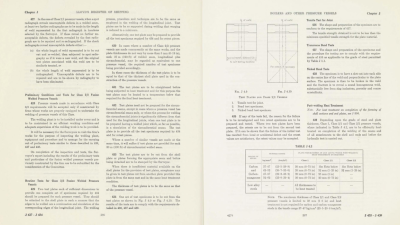
Lloyd's Register's Rules and Regulations for the Classification of Ships were first published in 1834 (initially bound within the Register Book) to set appropriate standards for the design, construction and lifetime maintenance of ships.
The rules have been published in various forms throughout Lloyd’s Register’s (LR) history and have played an essential role in assuring the safety and quality of the construction and maintenance of ships and been a constant companion to thousands of surveyors, shipowners, and shipbuilders across the globe.
The rules offer a fascinating insight into when and how technological developments made their way into the maritime industry.
Today, the LR Rules are still recognised as one of the most comprehensive and respected sets of standards in the maritime industry. To keep pace with changes in technology, market trends and new legislation, LR is dedicated to an ongoing programme of research and development to enhance existing technical standards and publish new Rules.
The historic Rules and Regulations add to the increasing collection of digitised resources on the Heritage Centre website. Our online offering now includes over 1.1 million digitised items:
Michael Launchbury, former Digital Archivist at the Heritage Centre, said: “As the lead responsible for the digitisation of the Lloyd's Register’s Rules and Regulations, I am delighted to see these documents made available online; enhancing the accessibility of this valuable maritime knowledge. This project represents a significant step forward in safeguarding our company’s heritage for future generations; which began with the digitisation of our Register of Shipping collection. I would also like to express my sincere gratitude to our former Digitisation Assistant, Max Rockliffe, whose hard work played a vital role in the successful completion of this project.”
For more information on current rules, visit LR.org.
The historic Rules and Regulations are freely available across Archive.org, Google Books and the Heritage website.
The historic Missing Vessel Books, a resource documenting disappearing ships at sea, is now freely available online.
The Heritage Centre has digitised the Lloyd's Register Technical Association papers (1920-1998), a freely available collection on maritime technical expertise.
Ensuring preservation and sustainability of historic records, while fostering trust and accessibility to make the collection available worldwide.

