


The Lloyd's Register Rules and Regulations are made digital
The historic Rules and Regulations (1849-1976), which ensured ships were built and maintained to a high standard, are now freely available online.
This page is approximately a 4 minute read
This page was published on
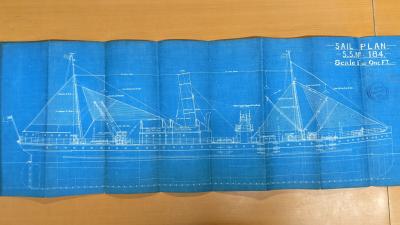
In May 2025, the Heritage Centre acquired items to complete our British Corporation Register collection. These included:
These acquisitions will be added to Lloyd’s Register’s (LR) collection of governing records for BC. These include minute books, financial ledgers, classification certificates, publications, and photographs.
The British Corporation Register of Shipping and Aircraft (BC) was primarily a marine classification society that formed in 1890. The initial members were made up of Scottish shipowners and shipbuilders with an express desire of representing the interest of Scottish shipping and marine and engineering developments at the time. Formed at the same time as the Merchant Shipping act of 1890 and the formal legal requirements of the Load Line they were quickly included among the organisations able to issue Load Line certificates.
BC were seen as competitors to Lloyd’s Register throughout their existence; they worked closely with international governments and organisations to help develop technical rules for the surveying and construction of ships and engines. They worked especially close with the American, Japanese and Italian governments in the early 20th century and worked closely on the Load Line convention of 1930.
Between 1927 and 1937, BC also branched out into aircraft surveying, changing their name to reflect this, however this aircraft inspection were shortly brought back under UK government control with the formation of the Air Registration Board.
Following the Second World War talks were instigated again between Lloyd’s Register (LR) and BC to contemplate a merger of the two organisations. After much debate, the two finally amalgamated in March 1949. The records for BC were transferred to LR in 1951 following this amalgamation. The journey to acquisition
The British Corporation ship survey reports and plans were transferred to the University of Glasgow and the Ballast Trust in the 1990s when Lloyd’s Register was downsizing its storage for records.
The Heritage Centre contacted Ballast Trust in 2020 in an attempt to see what records survived. At this time, the records for BC held by LR were being catalogued by the team at the Heritage Centre and identifying records held elsewhere and establishing the provenance of the whole collection was vital to the archival cataloguing process.
Having the records together under one roof greatly increases the research potential for understanding the role the British Corporation played in the maritime and engineering developments and further aid researching opportunities for Heritage Centre users.
Alongside Lloyd’s Register and the British Corporation, these include the records of the Liverpool Underwriters Registry for Iron Vessels. Having all these records physically together on one site will help to further conceptualize the links and developments in shipbuilding and engineering during the 19th and 20th centuries.
The British Corporation ship survey reports and plans were transferred to the University of Glasgow and the Ballast Trust in the 1990s when Lloyd’s Register was downsizing its storage for records.
The Heritage Centre contacted Ballast Trust in 2020 in an attempt to see what records survived. At this time, the records for BC held by LR were being catalogued by the team at the Heritage Centre and identifying records held elsewhere and establishing the provenance of the whole collection was vital to the archival cataloguing process.
Having the records together under one roof greatly increases the research potential for understanding the role the British Corporation played in the maritime and engineering developments and further aid researching opportunities for Heritage Centre users.
Alongside Lloyd’s Register and the British Corporation, these include the records of the Liverpool Underwriters Registry for Iron Vessels. Having all these records physically together on one site will help to further conceptualize the links and developments in shipbuilding and engineering during the 19th and 20th centuries.
The Heritage Centre plans to catalogue the records on their new collection management system, making them available for in-person research when the Centre re-opens after its refurbishment in 2026. Once catalogued, they will be ideal catalogues for the next large-scale digitisation project.
The historic Rules and Regulations (1849-1976), which ensured ships were built and maintained to a high standard, are now freely available online.
Ensuring preservation and sustainability of historic records, while fostering trust and accessibility to make the collection available worldwide.
The Heritage Centre has digitised the Lloyd's Register Technical Association papers (1920-1998), a freely available collection on maritime technical expertise.

