


Behind the scenes: Ship Models at Sweden’s Maritime Museum
Explore the behind the scenes process of filming the Argentina, a 'votive', the Aeolus and the East Indiaman ship models at the National Maritime Museum, Sweden.
This page is approximately a 3 minute read
This page was published on
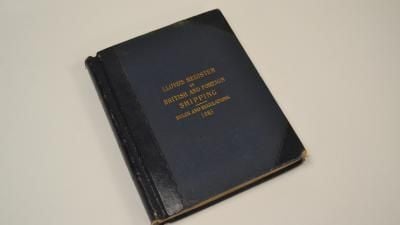
Lloyd's Register (LR) is a well-known name in the maritime industry, and its Rules and Regulations for the Classification of Ships have been an essential part of the industry for nearly 190 years. The rules have been published in various editions throughout LR’s history. They have played an essential role in assuring the safety and quality of the construction and maintenance of ships and been a constant companion to thousands of surveyors, shipowners, and shipbuilders across the globe.
The first formal set of LR’s Rules for the Classification of Ships was published in 1834. Although the organisation had been providing guidance on shipbuilding and maintenance since it’s foundation in 1760, in the early days, the rules were based on the experience and expertise of surveyors, who would inspect ships and provide guidance on best practices.
As the maritime industry grew more complex and technology advanced, the rules and regulations grew more detailed and prescriptive. The LR rules were used to ensure that ships were built and maintained to a high standard, and they were an essential tool for shipowners, shipbuilders, and regulatory bodies.
Throughout the 19th and 20th centuries, the rules played an essential role in the development of the maritime industry. In the early 20th century, LR played a crucial role in the development of safety regulations for passenger ships.
The rules offer a fascinating insight into when and how technological developments made their way into the maritime industry. We can use these publications to understand how the maritime industry responded to increasingly common and complex challenges. The rules have continued to evolve throughout the 20th and into the 21st century in response to changing technology and regulatory requirements.
They have remained relevant and effective throughout LR’s history by making sure new additions reflected widespread practices in shipping. For example, when steam engines became a common feature in ships, the rules were revised to have sections on engines. The same happened with refrigeration, oil engines, and much more.
Today, the LR rules are still recognised as one of the most comprehensive and respected sets of standards in the maritime industry. They are still regularly updated to reflect advances in technology and changes in regulatory requirements, and still function as a trusted companion to surveyors, shipowners, shipyards, and regulatory bodies around the world.
The Lloyd's Register Foundation Heritage Centre has been working to digitise this fascinating resource for anyone interested in maritime history.
The digitisation of the rules has been one of the most significant projects I have undertaken since joining the Heritage Centre as the Digitisation Assistant. This project has been made possible through the use of a robotic book scanner (or Roboscanner), which can scan and digitise large volumes of documents quickly and efficiently.
The digitisation of the LR rules is an essential project because it makes the information contained within them more accessible to researchers, historians, and other interested parties. They also provide an example of how the maritime industry can adapt to technological advancements.
By viewing how the industry changed from sail to steam, to oil, current surveyors, shipbuilders, shipowners, and regulators may be better placed to safely implement a shift to renewable energy sources in shipping. The rules are a crucial part of maritime history, and by digitising them, the Heritage Centre is ensuring that they can be preserved and studied for many years to come.
Explore the behind the scenes process of filming the Argentina, a 'votive', the Aeolus and the East Indiaman ship models at the National Maritime Museum, Sweden.
Explore the behind the scenes filming of the Cold War Rail Ferry, Oasis of the Seas, Stena Drillmax and Olympic Loyalty ship models at the IMO's headquarters.
A behind the scenes look at the process of filming HMS Vanguard, HMS Prince, Campania and Océan at the Science Museum's National Collections Centre, Swindon.

