


Rewriting Women into Maritime History
Uncovering female shipping expertise, experience and leadership to promote gender equity, diversity and inclusion. Founded in the UK, the project is now global.
This page is approximately a 6 minute read
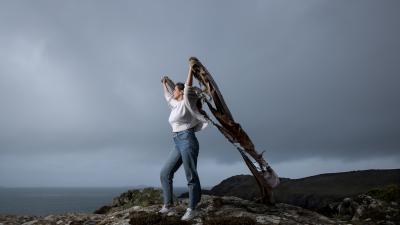
The ambition of Rewriting Women into Maritime History is to ensure that forgotten voices are finally heard. The stories generated highlight the many opportunities presented by a maritime career and raise the profile of maritime expertise, experience and leadership. Empowering women by re-framing the narrative of a predominantly masculine industry in the past and present, has potential to be an inspiring way to promote opportunities to encourage more women into the sector today.
During the first year, the Foundation partnered with over thirty maritime and heritage organisations as well as independent scholars of women’s and engineering history, including the International Maritime Organization, the International Chamber of Shipping, The Seafarers’ Charity, Women in Shipping and Trade Association, Associated British Ports, Historic England and Lloyd’s List. We received thirty-seven historical stories from organisations and researchers alike on women in the maritime industry.
The project evolved over its first year, from a primary focus on the historical discourse of women in maritime to also incorporate current narratives and stories of women actively working in the sector today. Representation matters and it is important that future generations are aware of and have the option to consider the many benefits a maritime career can offer.
To capture the stories of contemporary women, we photographed a total of twenty-seven professional women covering a range of maritime roles in the UK. The photographs aimed to capture the women in their environments –– specifically with the aim to spotlight and empower the women, as well as to showcase the environments in which they work
The Foundation has collaborated with Portsmouth Historic Quarter, the University of Portsmouth and the Portsmouth Royal Dockyard Historical Trust to bring SHE_SEES to Boathouse 4 and showcase the stories of women working in the Dockyard until the present day.
SHE_SEES at Boathouse 4, Portsmouth Historic Quarter
Stories of Women in Maritime- Then, Now, Onward.
Open until December 2026
FREE ENTRY
Historic Quarter Pass available from the Visitor Centre.
Explore the historical stories contributed by individuals and UK institutions as part of the Rewriting Women into Maritime History programme.
Learn moreExplore the stories of twenty-seven professional women working in the maritime industry in the UK and Ireland today. These stories were collected as part of the Rewriting Women into Maritime History programme.
Learn moreLearn more about SHE_SEES. A celebration of the women who have shaped the maritime industry.
Learn moreThe Women in Shipbuilding project was led by Historic England in 2023 and funded by Lloyd's Register Foundation as part of the Rewriting Women into Maritime History initiative. The exhibition aimed to boost awareness of the role that women played in shipbuilding and marine engineering in north east England during the First World War.
Learn moreFirstly, a thank you to all the women who have shared their stories. The following list contributed stories of women working in the maritime industry historically to the UK and Ireland phase of the Rewriting Women into Maritime History programme.
Jo is an internationally acclaimed expert on gender in maritime life. To access her seminal books, articles, and social media contributions see her blog.
Dr Nina Baker, an independent engineering historian specialising in the history of women in engineering and was appointed an OBE in the 2023 New Year’s Honours’ list, for services to the history of women in engineering.
Lauren Tidbury is a maritime archaeologist and works for the Honor Frost Foundation and Maritime Archaeology Trust. She is an experienced diver and has worked on underwater archaeological projects around the world, from submerged prehistoric landscapes to WWI shipwrecks. Lauren has a degree in Archaeology and a Masters in Maritime Archaeology from the University of Southampton.
After graduating from the University of Liverpool Master of Archives and Records Management (MARM) Sarah worked as an archivist at Liverpool Central Library and Archives before moving to National Museums Liverpool. Sarah is now the Lead Archivist, Maritime & Slavery Collections based at the Maritime and International Slavery Museums.
Jennifer Robertson is the Project Curator at Liverpool's Maritime Museum, part of National Museums Liverpool. She has a particular interest in built heritage, mental health and women’s stories. She is also co-chair of National Museums Liverpool’s Disability and Mental Health Staff Group, and a lover of ship and architectural models.
Lily Tidman is a recent graduate of the University of Oxford and UCL. She works as visitor and sales assistant manager and researcher with Royal Museums Greenwich, focusing on their Maritime Memorials project.
Sarah Robinson is the Senior Journalist at Nautilus International, a trade union and professional organisation serving, supporting and protecting the interests of more than 20,000 maritime professionals in the UK, Netherlands and Switzerland.
Dr Helen Doe, is an Honorary Research Fellow at the University of Exeter and Chairman of the British Commission of Maritime History.
Laura Boon-Williams is Lloyd’s Register Foundation Senior Curator of Contemporary Maritime at Royal Museums Greenwich.
Caroline Randall graduated with a degree in History & Geography from Leeds University, and an MA in Victorian Studies from Leicester University. After then obtaining a PGCE from the Institute of Education, University of London, worked as a History teacher in various London secondary schools for the next 13 years. Whilst working as a teacher, she also graduated with an MA in Historical Research from Birkbeck College, University of London.
In 2017 Caroline joined the Seafarers Hospital Society and from 2020-2023 worked on cataloguing their substantial 200 year old archive and prepared the archive for transfer to the Wellcome Library where it is now housed. She is currently the Honorary Archivist of the Seafarers Hospital Society.
Richard Wemyss is the Chair of The Cellardyke Trust, a Scottish charity that aims to advance citizenship or community projects in the arts, heritage, culture or science.
Mariana Noceti is the Principal Programme Assistant for the International Maritime Organization's Women in Maritime Programme. A programme that enhances the contribution of women as key maritime stakeholders and supports the participation of women in both shore-based and sea-going posts.
Pressiana Naydenova is the Corporate Communications Manager for Associated British Ports and key member of the Rewriting Women into Maritime editorial board.
Tom Scott is the Account Manager for NavigatePR working for the International Maritime Rescue Federation (IMRF), an international non-governmental organisation (NGO) working to develop and improve maritime search and rescue (SAR) capacity around the world.
Emma Lingard is the Corporate Communications Manager for Associated British Ports, Grimsby Port Office.
Elizabeth Oliver, is the Digital Content Producer at Royal Museums Greenwich and lead on the Making Waves programme.
As part of the UK and Ireland phase, we worked with Off Watch Podcast, a podcast which centres around traditional sailing vessels and the pros and cons of working in the maritime field. It is hosted by two women who work in the sailing profession and interviewed the cohort of women captured during SHE_SEES to voice their stories of working in the maritime world to a public audience.
How have women been written into maritime history? Dr Jo Stanley explores how women's presence in UK maritime history with a complete bibliography on UK gendered maritime history.
Learn moreUncovering overlooked stories to build a more inclusive narrative that fosters trust and fairness across global maritime history.
Dr Nina Baker explores the presence of women in shipbuilding on the Clyde during the First and Second World Wars.
The career of Emily Ball, as part of the wider SHE_SEES component of the Rewriting Women into Maritime History exhibition.


