




Theme 4: Equity & Transparency – Forgotten Voices and Hidden Figures
Uncovering overlooked stories to build a more inclusive narrative that fosters trust and fairness across global maritime history.
This page is approximately a 4 minute read
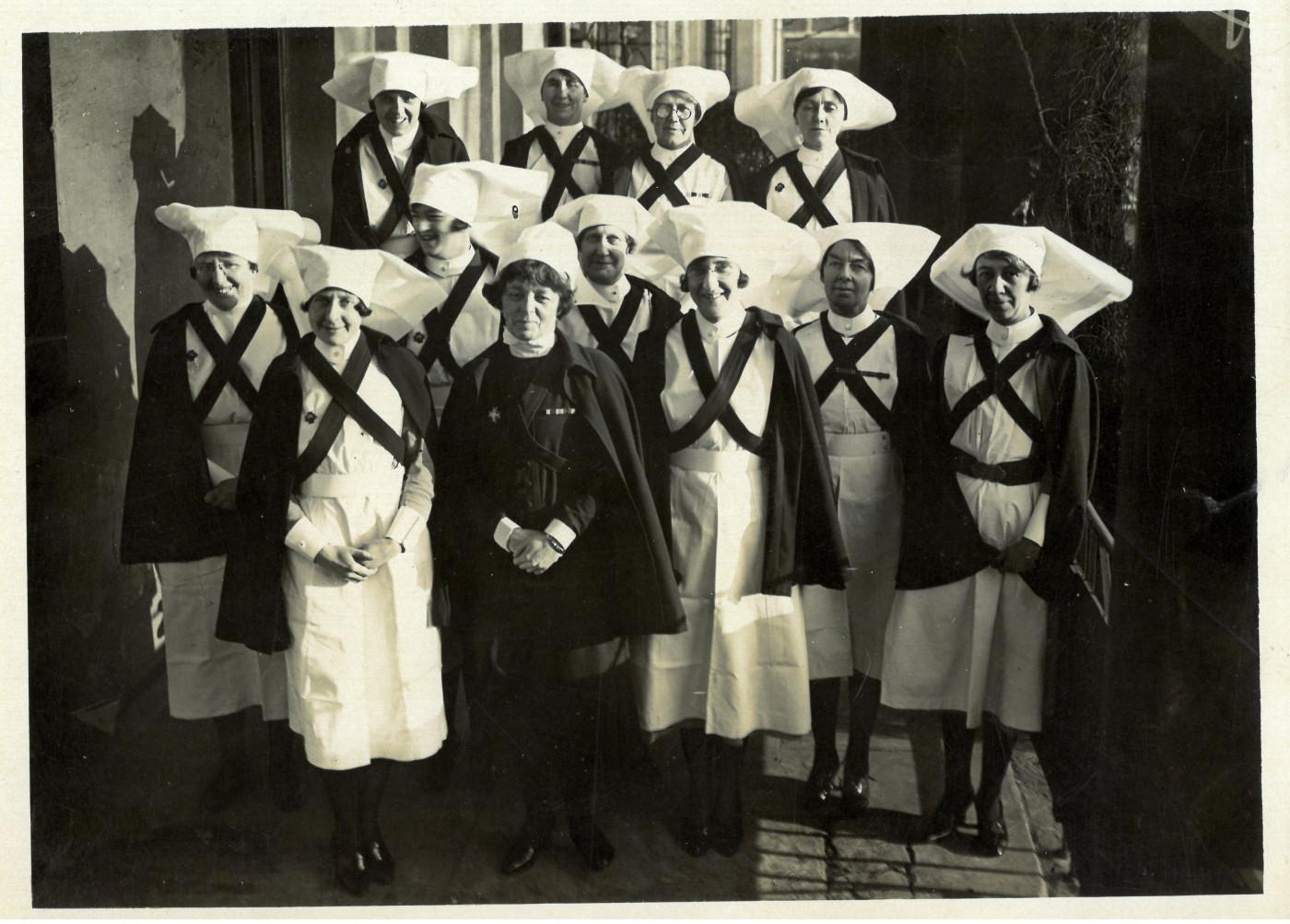
The history of the Seafarers Hospital Society is enriched by the women who have supported and enabled its work at every stage — whether serving as nurses, doctors, patrons, fund raisers, and administrators — to ensure the continued support of seafarers of any nationality working in the United Kingdom.
The Seafarers Hospital Society, initially named the Seamen’s Hospital Society, was founded in 1821 by a group of philanthropists, including abolitionist MPs William Wilberforce and Zachary Macaulay. Motivated by the desire to improve the lives of merchant seafarers by introducing preventative procedures to contain and mitigate diseases common among sailors at the time, they set up and ran the Dreadnought Seamen’s Hospital.
From 1821 to 1870, this hospital was situated on a series of ships moored on the River Thames at Greenwich. From the 1870 onwards, the Dreadnought Seamen’s Hospital moved onshore, and for the next 116 years it was located in the old infirmary of the Royal Hospital Greenwich. In 1877 the Dreadnought School of Nursing was founded and for 109 years offered high quality professional training for nurses working with the Dreadnought’s seafaring patients.
By the 1920s the Society was running seven hospitals – the Dreadnought Seamen’s Hospital in Greenwich; the Albert Dock Hospital in East London; King George’s Sanatorium for Sailors in Hampshire; the Queen Alexandra Hospital in Marseilles; the Angas Convalescent Home in Kent; Tilbury Hospital in Kent; and the London School of Tropical Medicine in central London. Crucial to the smooth and successful running of the Society’s hospitals were the hundreds of female nurses who worked in them and were trained to meet the specific needs of their seafaring patients.
The fact that the Society ran multiple medical institutions meant that it offered a wide range of employment opportunities for women. The Society ran courses in tropical nursing at the Albert Dock Hospital, which offered an alternative form of nurse training for women who might wish to work abroad. As a result, these nurses were experts in dealing with the many tropical diseases that afflicted seafarers during a period of expanding colonial trade.
In 1929, the Devonport Nurses’ Home in Greenwich was opened by the Duke and Duchess of York. It became the home of many generations of trainee nurses until the Dreadnought Hospital closed in 1986. These trainees were overseen by well-respected matrons, such as Alice Hall who worked in seafarer hospitals for 30 years.
Alice Hall trained at Guy’s Hospital and, after one year as Matron of the Albert Dock Hospital in 1895, she was promoted to Matron of the Dreadnought where she stayed until she retired in 1925. She was known for her energy and enthusiasm and, although a strict disciplinarian, worked tirelessly to improve the welfare of the nurses under her care. In this she shared a passion with Florence Nightingale, who wrote her a letter which, along with one of her famous lamps, is now in the Seafarer’s Hospital Society’s archives. Matron Hall received the MBE for her services during the First World War when naval and military wounded joined seamen from the Merchant Marine for treatment at the Dreadnought.
Dreadnought nurses also ran events to raise funds throughout the 1920s and 1930s. Among the best known of these events was the annual Dreadnought Christmas pudding stir-up, attended by the Secretary, matron and local dignitaries. All the ingredients for a giant Christmas pudding were donated by the Australian High Commission, and nurses served the finished pudding to Dreadnought patients on Christmas day. Christmas shows, dances and races were also held to raise money for the hospital.
Another well-known event was the annual regatta held on the River Thames in Greenwich over the course of the August Bank Holiday weekend. Hundreds of spectators would watch the races on the Thames, particularly the Ladies International Four Oared Rowing Race . Dreadnought nurses were involved in the regatta and helped construct a large-scale model of the Dreadnought Hospital ship which was floated on the river in front of the Royal Naval College.
Explore the historical stories contributed by individuals and UK institutions as part of the Rewriting Women into Maritime History programme.
Explore moreUncovering overlooked stories to build a more inclusive narrative that fosters trust and fairness across global maritime history.
Explore disability in maritime history, from injuries and mental health challenges to modern advocacy for inclusion and safety at sea.
The career of Rose King as part of the Rewriting Women into Maritime History initiative.

