
Theme 3: Safety – Shipwrecks and Maritime Disaster
Learning from past maritime disasters to develop a global perspective and integrate lessons learned to advance maritime safety, resilience and sustainability.
This page is approximately a 5 minute read
Leveraging our funding, archive and knowledge network to address the environmental risks posed by hazardous materials in thousands of sunken vessels worldwide.
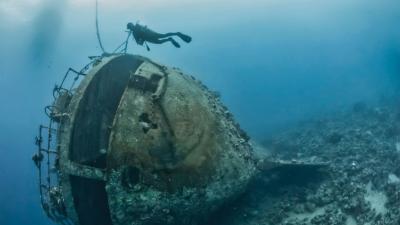
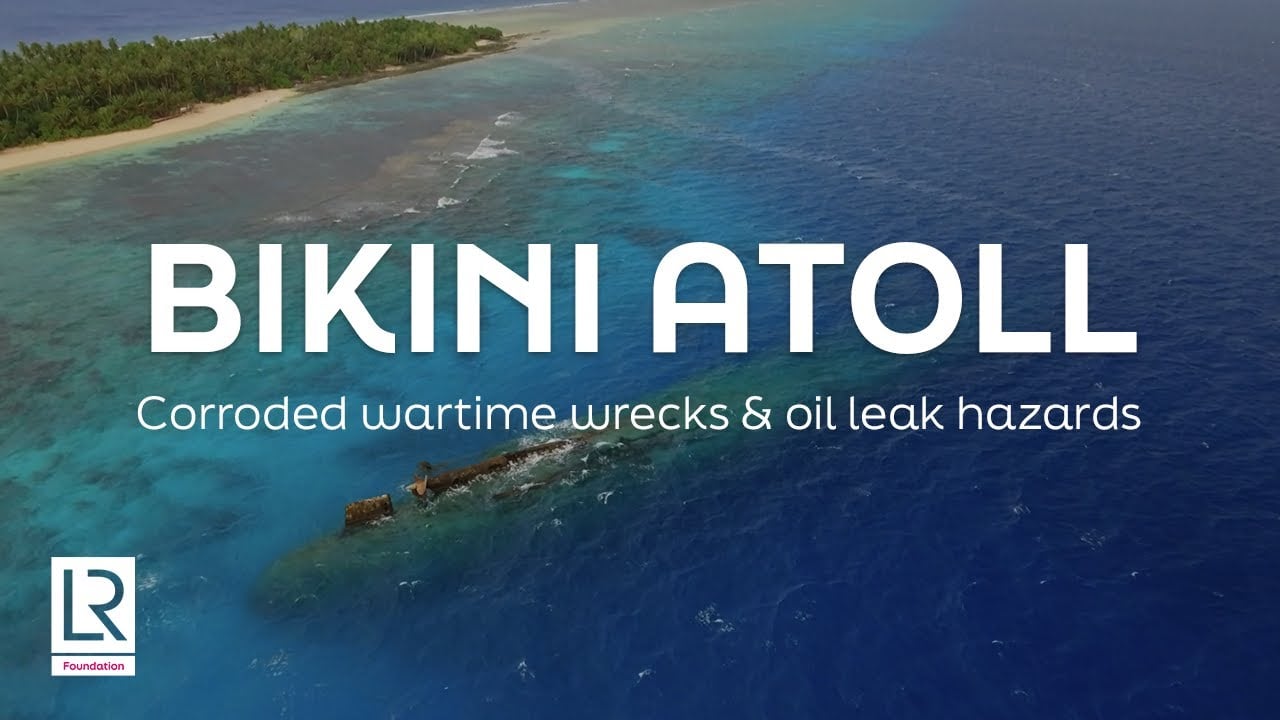
According to the International Union for the Conservation of Nature: “There are an estimated three million sunken and abandoned vessels in the ocean, over 8,500 of which are classified as ‘potentially polluting wrecks’. The majority of these wrecks date back to World War I and II (WWI and WWII) and contain harmful chemical pollutants, unexploded munitions and an estimated six billion gallons of heavy fuel oil. This is 545 times more oil than the Exxon Valdez leak in 1989 and 30 times that of the Deepwater Horizon spill in 2010, both of which had severe and long-lasting environmental consequences.
“Severe weather events resulting from climate change are likely to speed up the process of wrecks breaking apart. After more than 75 years of corrosion, leaks from sunken vessels are expected to reach their highest levels within ten years, but scientists do not yet have enough data to forecast when or where individual leaks will occur. The financial cost of responding to pollution from wrecks is prohibitively expensive for developing nations. It is also unclear who is responsible for this cost. Many of the countries most affected were not participants in WWI and WWII, and ships sunk in war remain owned by the country they sailed for under the principle of sovereign immunity.
“The lack of data and international cooperation on how to manage pollution from wrecks means many governments do not act proactively to prevent leaks. Therefore, responses are often too late to prevent serious harm to marine ecosystems and the health and livelihoods of coastal communities.”
Through our commitment to using our heritage as a useful evidence base for safety, learning from the past to create a safer future for the ocean, alongside our strategic mission to support Safer Maritime Systems, we have identified how a combination of our funding, archive and knowledge network can be very impactful on this issue.
A key area of funding and partnership sits with the Threats to our Ocean Heritage grant, and through that, Project Tangaroa, led by The Ocean Foundation and Waves Group.
The Threats to our Ocean Heritage grant has produced three important open access publications, exploring potentially polluting wrecks (PPWs), bottom trawling and deep sea mining. Part of this grant also enabled Project Tangaroa, which through a series of workshops and stakeholder convening, has drawn leading international experts together to become the driving force in tackling the PPW issue.
As well as this programme, we have funded other projects to further understanding of different areas of the PPW issue. Many of these projects resulted from the convening and connections that took place during Project Tangaroa.
This project will link the following three databases:
This project will identify, refine and make publicly available information and methodologies on polluting wrecks in Arctic waters. This is a vital part of building the available evidence for Project Tangaroa. The information will be instrumental in articulating key safety risks and challenges in the region. Managed and delivered by Maritime Archaeology Sea Trust and its partner The Maritime Observatory, the project seeks to identify all military and merchant marine vessels lost in the area of the Arctic convoys during both the First and Second World Wars (approximately 200 wrecks). It uses a range of satellite-based remote sensing techniques to conduct a rapid assessment of all the wreck sites identified for evidence of pollution and fuel leaks.
Survey of Maritime and Underwater Cultural Heritage
The Survey of Maritime and Underwater Cultural Heritage (SoMUCH) project will gather and collate data for cross-disciplinary research on ocean health monitoring, coastal erosion and dissemination, into an open-source database. A common methodology will be developed, examining the results of past, current and future projects by global NGOs. This will maximise the value of Underwater Cultural Heritage to indicate risks while identifying and mitigating gaps in knowledge. The Lloyd’s Register Foundation grant will enable the development phase, enhancing the network and building a detailed project delivery plan.
Gathering information for citizen science monitoring of polluting wrecks
This data gathering project will create a framework for a PPW citizen science monitoring scheme to make both the environment and water users safer. Marine environment user groups will be visited to raise awareness of the threat of PPWs to them, and the environment. These advocacy visits will establish the current knowledge level on PPWs among the marine community and assess their capacity to safely and effectively collect data. In parallel, relevant government partners will be consulted to ensure that data capture is appropriate for their management of PPWs. This scheme could be disseminated globally through NAS’s international training partners.
Cultural Heritage Framework Programme
We have also funded the secretariat of the Cultural Heritage Framework Programme of the UN Decade of Ocean Science for Sustainable Development to enhance engagement between heritage bodies and widen ocean stewardship efforts, of which Threats to Our Ocean Heritage is an Endorsed Action.
While the work that we fund directly is focused on safety and engineering solutions, legacy wrecks also pose great threats to biodiversity and the stability of coastal communities. We believe that new funding arrangements are required to enable interventions and safeguard coastal and marine ecosystems.
Learning from past maritime disasters to develop a global perspective and integrate lessons learned to advance maritime safety, resilience and sustainability.
Discover how ballast shaped maritime safety, preventing shipwrecks and influencing global trade—a hidden history beneath the waves.
Oxford micro-intern, Hamish Low, shows how containerisation’s history can guide today’s decarbonisation efforts, as part of Learning from the Past.

