

Theme 1: Lloyd’s Register Collection - Safeguarding Old Knowledge, and Corporate Memory
Ensuring preservation and sustainability of historic records, while fostering trust and accessibility to make the collection available worldwide.
This page is approximately a 4 minute read
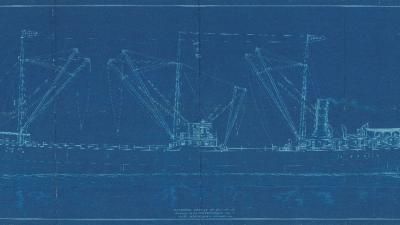
Reports of survey and plans/technical drawings informed the details of each vessel’s entry within Lloyd’s Register’s annually published Register of Ships. These surveys were conducted in accordance with approved rules and regulations for the construction and maintenance of vessels. Though records are generally internal communications between survey offices and the head office in London, or between committees and departments, records from owners, builders, tradespeople, and other third parties are commonplace. Decisions regarding classification, taken at committee level, were informed using these technical survey reports, drawings/plans and accompanying correspondence as they were received from surveyors.
Earliest records begin from the reconstitution of Lloyd’s Register of British and Foreign Shipping in 1834 to the computerisation of surveying records in the 1960s/70s. Following internal practice ship plan and survey report material generated from the 1960s/70s until circa 2000 exists in microform, e.g. microfilm and microfiche. From 2000 onwards materials are held on CD-ROM, as well as internal networks, drives, servers and management systems. Prior to 1852, surveying actively was almost exclusively limited to vessels built at, operating out of or passing through British and Irish ports. The subsequent period saw the rapid expansion of overseas survey offices, which is reflected in the archival record.
A search through the collection will no doubt yield some useful information, but researchers will get the most out of the Ship Plans and Survey Report collection (SPSRs) by preparing ahead of time. For example, the collection centres on the vessels surveyed and classed by LR. The more you know about each vessel, the easier it becomes to locate any relevant documentation.
The most obvious helpful information to know is the name of a vessel, especially if that vessel has had several names during its working life. Generally, the SPSR holdings list vessels under their later or final names. For example, the Hull trawler Arctic Outlaw had four names during her trawling years and is listed in the SPSRs under her final name of Stella Arcturus. The more names you know before searching the collection, the easier it will be to narrow down results to the vessel you are looking for. Likewise, information about where the vessel was built, when, and the shipyard that completed the work are useful, as is any tonnage information. There may be many vessels listed with the same name, so any additional information will be useful in differentiating between them. From 1963 onwards, with the introduction of the LR number (and the IMO number from 1980), vessels had a unique identifier that remained the same throughout their service.
To confirm the details of or provide additional information on vessels, please see the online guide to the Register of Ships.
SPSRs are housed in ascending sequentially numbered boxes. Overall arrangement of the Classification and Survey Series reflects four major clerical changes. These three major sub-series are as follows:
Ensuring preservation and sustainability of historic records, while fostering trust and accessibility to make the collection available worldwide.
The Rules and Regulations for the Classification of Ships ensure safe, high-quality construction and maintenance for surveyors and shipowners.
The Heritage Centre offers shipwreck research resources from the 18th century onwards, including photographic collections and detailed unpublished Wreck Books.

