




Behind the scenes: Ship Models at Sweden’s Maritime Museum
Explore the behind the scenes process of filming the Argentina, a 'votive', the Aeolus and the East Indiaman ship models at the National Maritime Museum, Sweden.
This page is approximately a 17 minute read
Roy and Lesley Adkins, Historians and Archaeologists
Roy and Lesley Adkins are historians and archaeologists who live in Devon. They have written widely acclaimed books on social, naval and military history, including Jack Tar, Gibraltar, Trafalgar, The War for All the Oceans, Eavesdropping on Jane Austen’s England and When There Were Birds. They are Fellows of the Society of Antiquaries, Fellows of the Royal Historical Society and Members of the Chartered Institute for Archaeologists.
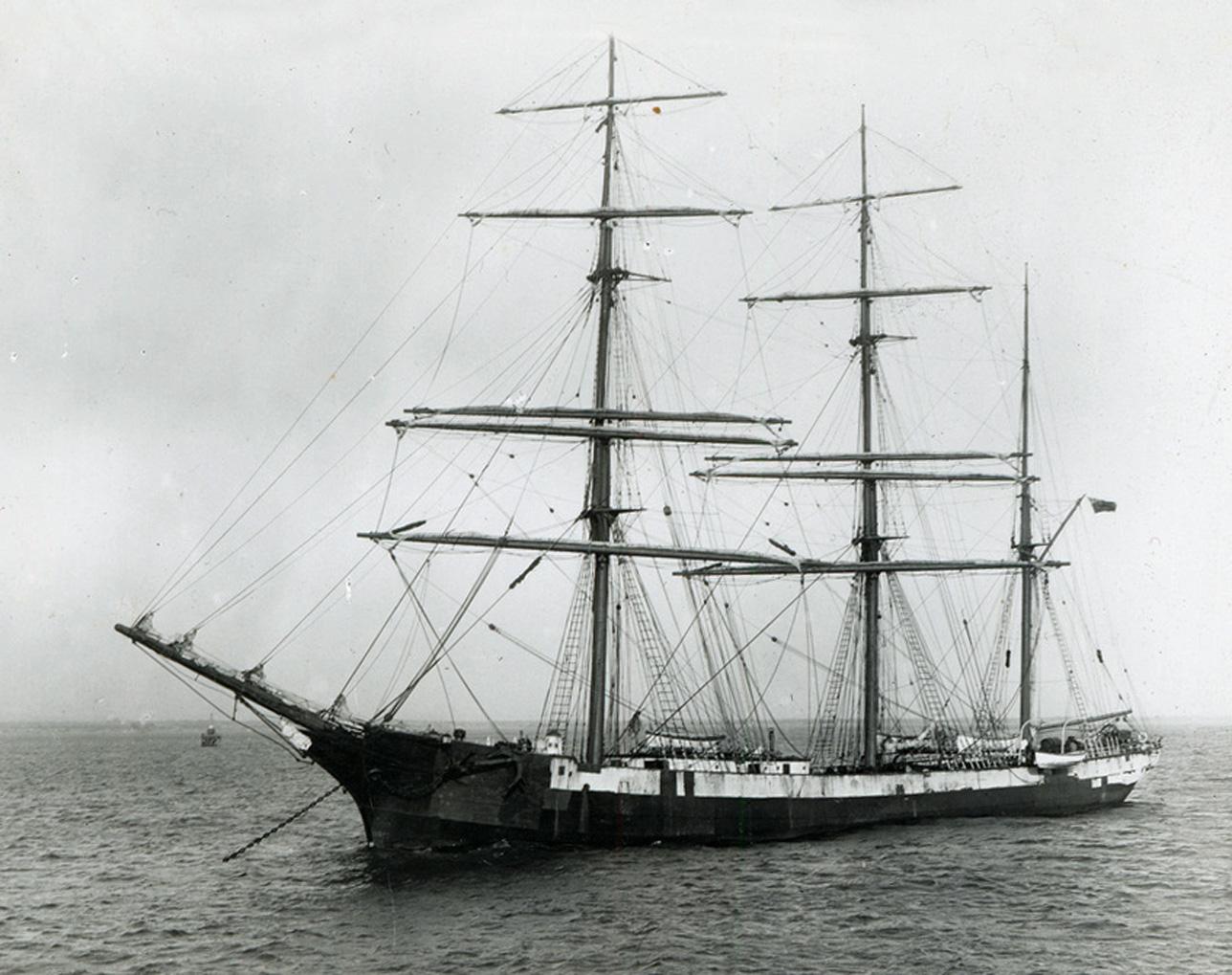
Vermin such as lice, fleas, rats, cockroaches, scorpions, centipedes, maggots, snakes, tarantulas and shipworm made life at sea unpleasant and even hazardous, especially in an era when transmission of disease was poorly understood. Infestations were commonplace and prevention and eradication ineffective, so that crews and passengers were vulnerable to illness and death, cargoes were spoiled, vessels compromised and disease spread worldwide.
Amongst the challenges of life at sea, especially in the age of sail, was vermin – creatures that were harmful or regarded as offensive. Unwanted wildlife was a constant nuisance, especially in hot climates, but in the past probably every ship had rodents, particularly rats, and as ships ventured across the world, different kinds of vermin were encountered. When off Mauritius in early 1811, James Prior, surgeon of the Royal Navy frigate Nisus, described conditions: ‘Rats, mice, mosquitoes, locusts, flies, bugs, moths, cockroaches, fleas, scorpions, centipedes, and others, infest the shipping more than the shore ... we have been frightened in our beds by the prowling of rats, blistered by mosquitoes, bitten by fleas, driven out of bed by bugs, and in danger of being fairly carried off by thousands of cockroaches.’ Steam vessels were not immune, and at the Port of London in 1850 the journalist and social reformer Henry Mayhew met a fireman who for two decades had worked on steamships. The engine-room, he told Mayhew, was damp, hot and swarming with bugs: ‘I hardly knew what bugs were, in comparison, on shore, but their head-quarters are in the engine-room of steamers.’1
Vermin also stowed away in provisions and stores, in cargoes such as foodstuffs, timber and animal hides, on people’s skin and clothing, and in firewood. In 1783 Jeffrey Raigersfeld of the warship Mediator warned about firewood: ‘In the West Indies, the fuel made use of on board a ship is wood, among which varieties of insects are brought, such as scorpions, centipedes, and tarantulas, with now and then a few snakes; these soon begin to crawl all up and down a ship, even into the hammocks, and the men frequently got stung and bit by them.’2 A century later newspapers reported that after the Lucy T Harvey schooner sailed from Port au Prince in Haiti to Philadelphia, over 100 centipedes were found on deck, apparently fallen from the sky. Two days later the cook ran screaming from the galley, which was swarming with them, and subsequently thousands were discovered in the hold: ‘The cargo of the schooner consisted mainly of logwood and cedar. Capt. Hall thinks that the centipedes were hidden in it. He thinks that they fell from the masts after climbing out of the hold and thereby appeared to fall from the sky.’3
Laura Bagley was the wife of the master of the Levi C Wade, an American wooden three-masted sailing ship, and a week after passing Ascension Island, on their way to Falmouth in Cornwall, she noted in her diary for Sunday 6th February 1881: ‘By another Sunday, I hope it will be cool enough to drive some of the ants and roaches out of sight. The ship has been alive with them ever since we have been in warm weather.’4 Although ants were at times a nuisance, many infestations were of ‘white ants’, which are termites – a type of cockroach. Thousands of species of cockroach exist worldwide. Measuring 10–30mm in length, these nocturnal creatures resemble beetles, but with long antennae.’ Some can fly or glide over short distances, as James Prior experienced: ‘... they fly about confusedly in the night, continually dart in our faces, sometimes extinguish the candles ... My cabin is frequently covered by clouds of these creatures, which give it the semblance of being daubed with animated brown varnish.’5
Crews visiting foreign shores were vulnerable to contracting diseases for which they had no immunity, like malaria and yellow fever, both transmitted by mosquitoes. On his first voyage in 1911 Thomas Fairburn and his fellow apprentices of the barque Inversnaid found that their bunks were ‘crawling with bedbugs’ once the weather became warmer. Crews and passengers often suffered from the bites of bedbugs, lice and fleas, but although bedbugs emit an obnoxious smell, they carry no diseases. Lice were more problematic, because their faeces (even on bedding and clothing) could transmit typhus and other diseases. Known by names such as gaol fever or ship fever, typhus spread rapidly in cramped conditions and was potentially fatal.6 Fleas were troublesome, and in 1936 the maritime journalist Frank C Bowen wrote that some cargoes were especially bad: ‘Coal cargoes, which occupied so many ships, brought thousands of fleas on board, for no apparent reason, as did also the wool cargoes of Australia. In hot weather the fleas came up the ventilators in hundreds and when the hatches were taken off all hands were scratching.’ The three-masted iron barque County of Pembroke reached Newcastle, New South Wales, during a coal strike in 1900, resulting in a considerable delay before they could load their cargo and set sail for Chile. One apprentice, James Bisset, said: ‘On the way there the ship was beset with a plague of fleas, said to have been brought on board with the coal. There were millions of them and we got little sleep.’7
Rats were the most visible of all vermin, and a typical encounter was in early 1904 when the Penrhyn Castle, a three-masted steel barque, left the Melbourne port of Williamstown in Australia loaded with grain. Her second mate, Claude Woollard, said that copious rats ‘ran over us when we were asleep and we came across them everywhere, particularly in lockers and storerooms ... On occasions they were bold enough to crawl into our bunks and endeavour to gnaw at our toe nails.’8 Known as the ‘ship rat’, the black rat (Rattus rattus) is black or grey-brown in colour, nocturnal, largely vegetarian and adept at swimming and climbing. In more temperate regions such as Europe and North America, the bigger and more aggressive brown rat (Rattus norvegicus) has driven out most black rats.9 For centuries rat fleas spread diseases across the world, including the oriental or tropical flea (Xenopsylla cheopis), which was discovered by Charles Rothschild in 1901 to be the carrier of bubonic plague (caused by the bacterium Yersinia pestis).
At New York more than 18,000 rats were collected during 1925–7 after fumigating ships from across the world. Most were black rats, and nearly 8,000 fleas were also obtained, primarily Xenopsylla cheopis.10 Three deadly bubonic plague pandemics have occurred, the first being the Plague of Justinian in the 6th century. The second pandemic in the mid-14th century is best known as the Black Death and was spread mainly by ships carrying black rats with infected fleas, though on land it was transmitted much more by lice and the human flea (Pulex irritans). The third pandemic dates from the late 19th century into the early 20th century, spreading initially from Yunnan in China to the port of Canton (Guangzhou) in early 1894, then to Hong Kong and subsequently to port cities around the world.11
Provisions for crews and passengers as well as cargoes were constantly at risk from rats and other vermin. Bowen described the presence of maggots: ‘The bone trade from the River Plate to the Mediterranean was a particularly unpleasant one; fragments of meat were generally adhering to the bones when they were shipped, and bred maggots that penetrated everywhere, not only into the living quarters but even into the harness cask and bread barge.’12 For naval and merchant seamen, a common complaint across the decades was that biscuits (‘hard tack’, a substitute for fresh bread) were full of weevils and maggots. Reddish-brown bread beetles (Stegobium paniceum, also referred to as biscuit beetles, drugstore beetles and biscuit weevils) are not actually weevils. About 2–4mm long, these beetles infest dry food stored in dark, warm conditions, and their more destructive larvae, which resemble maggots, grow up to 5mm long. The more visible infestations of biscuits were probably cadelle beetles (Tenebroides mauritanicus), which are dark brown to black in colour, 6–12mm long and carnivorous. Their larvae, which are off-white with black heads, about 15mm long and similar to maggots, would have eaten stored food and cargoes like grain, flour, ship biscuits, dried fruit and (as the larvae developed) other insects.13
Writers have been accused of exaggerating biscuit infestations, yet eyewitness accounts include master mariners talking about their apprentice days. William C Wheatley went to sea as an apprentice in 1901: ‘Nowadays, many people think that the stories regarding the food on these old-time ships are exaggerated, but this is not always the case ... “Liverpool biscuits”, or “hard tack” were extremely hard, and so weevilly that it became automatic to knock them on the table before eating, in order to shed some of the inhabitants.’ The previous year, 1900, Woollard was on his first voyage as an apprentice with the Penrhyn Castle, and he described the different brands of biscuit: ‘... the Liverpool Pantiles appear to have been the most popular kind, which was easily recognised by its 29 or thereabout holes, unfortunately a hiding and breeding place for various types of insects, such as maggots and weevils’. Woollard said they raced them, so they were probably cadelle beetles.14
On board the Garthpool cockroaches were likewise raced, according to Albert George Course: ‘The finest specimens were chosen, painted with racing colours, and put in tracks in long, glass-covered boxes. A piece of food, liked by cockroaches, was placed at the far end of the track and they were released simultaneously to start their race.’15 Cockroaches ate all kinds of human and animal food, spreading disease such as salmonella and leaving an unpleasant odour. Augusta Hendee found cockroaches a constant nuisance on board the Sabine merchant ship. She was accompanying her husband Captain Thomas Hendee on a voyage to Bombay in India, and the hot weather of the Indian Ocean proved intolerable, as portrayed in her diary entry for 21 January 1860:
The great portion of the night was spent in killing cockroaches. They are thicker than ever, and we have discovered lately that they are particularly nice for flavoring pies & puddings. At least we find that everything tastes of roaches. Mr Stearns has written a Parody on Tennyson’s Charge to the 600 – The subject being Roaches to the right of them! Roaches to the left of them!16
Water and other liquids were also affected by vermin, and in his 1858 manual on the stowage of cargoes, Robert White Stevens warned: ‘Cockroaches will attack the corks of bottles containing champagne and other delicate articles, unless protected with tinfoil or metallic capsules.’ Rats were even worse: ‘They will gnaw holes in casks containing water ... and waste the ship’s store long before the voyage is completed. Casks of wine, spirits, and most other liquids, lead pipes, &c, are liable to the same attacks.’17 The Nautical Magazine in 1875 agreed that rats gnawed anything to obtain water:
We have seen a leaden pipe ... completely gnawed through by rats in their endeavours to get at the water––nothing seems to stop them. On board a ship on one occasion, some rat-holes were found, when the ship got into dry dock, eaten right through to the copper, and to prevent a recurrence of the same thing, a daily allowance of water was served out to them on the hatches on the ’tween decks, and they used to come as regularly to drink it as if they had signed articles, and considered it their right.18
On board the Penrhyn Castle one seaman, Walter Hearle, said that after rounding Cape Horn in December 1905, the carpenter discovered that the lid was not on the freshwater tank: ‘To his horror he found a quantity of dead rats floating about on the surface of the few inches of water which remained. They had either jumped or fallen in, and over twenty were counted.’19
Apart from damage caused by their quest for water, rats did other substantial harm by their constant need to gnaw to keep in check their four chisel-like incisors, which grow continuously, and by their constant search for nesting materials, such as charts, parchment documents, mail packages and sails. On 12 August 1909 Captain James S Learmont of the Bengairn, a four-masted iron barque, left Iquique in Chile laden with nitrate, bound for Ardrossan in Scotland. A few days after passing the Azores he considered a route round the north of Ireland, ‘but on going to the spare cabin for my big scale chart of the North Channel I found that the rats had been there before me! They had been using it for nests and not wishing to use a small scale chart I had no choice: I must go up the Irish Channel.’20 In his 1858 manual, Stevens wrote: ‘Rats ... make considerable havoc among sails, especially in those parts on which oil or grease has been dropped, and evince a decided preference for new canvas, because it is softer for their nests.’ A later edition gave more details: ‘Some masters have, it is said, saved their sails by supplying soft paper for the nests ... It has been suggested that the fibrous matter and oily substances collected occasionally for these nests may lead to spontaneous combustion.’ In 1875 the Shipping and Mercantile Gazette said that rats ‘are quite capable of committing arson as well as larceny. We fear that many a ship that has left Port thoroughly sound in hull has been made unseaworthy by the ravages of rats.’ In particular, rats were fond of tallow and were believed responsible for dragging away lighted candles and starting fires.21
Catastrophic damage to ships was done by wood-boring and wood-digesting worms (shipworm), in particular Teredo navalis, an aggressive tropical marine bivalve mollusc with a wormlike body that can grow more than a metre long. Larvae bore into wooden hulls, forming tunnels and developing into adult shipworms. From the outside, the wood appears unscathed, but the tunnels weaken the timber, making it liable to collapse. Gribbles are isopod crustaceans up to 5mm long and can also burrow into wooden hulls, stripping away the surface and causing significant damage. Shipworm and gribble are spread by shipping, endangering not just wooden vessels, but also wooden wharves and coastal structures worldwide. In the Netherlands in the 1730s shipworm was found in the timbers protecting the dikes, as well as structures such as lock gates, and stone revetments had to be built to avert a catastrophe. From the 1860s to 1940s a massive infestation of Teredo navalis resulting from increased commerce affected every coast of America, causing havoc and millions of dollars in damage, while ‘teredo’ became a derogatory word.22
For much of history, seafarers had to tolerate vermin. Various methods of protecting wooden hulls were tried over the centuries to prevent shipworm, the most effective being copper sheathing. In 1804 while in the East Indies on board the warship Culloden, Robert Hay recorded eradication methods for other vermin: ‘... it was prescribed as a daily task to each of the boys to produce either a rat, a bandecout, a scorpion, a tarantula, a centipede, 20 cockroches, or 20 eggs of the last-named fly. Though this doubtless kept down their number considerably, still they abounded greatly and proved very troublesome.’ James Prior found the only way to deal with cockroaches was ‘a furious assault, right and left, with a weighty towel, which stuns a few of the enemy, and drives the remainder to their covert abodes’.23 A few decades later, Stevens described fumigating ships in dock, after discharging the cargo:
The ... only course for the total destruction of vermin, is to stop every crevice and smoke the ship with a fire of charcoal in the hold, or with sulphur, or mercury, &c. ... A practical chemist recommends chlorine instead of vapour or sulphur; the gas from chlorine is violently irritating, and its inhalation may cause serious illness if not fatal results. Some recommend the suspension of iron pots containing quicksilver, about six or eight inches above the charcoal or sulphur fires, which it is said will destroy beetles, cockroaches, bugs, &c.24
Commander Claude Martin Butlin and his wife travelled back to Britain from Australia in 1934 as passengers on board the four-masted steel barque L’Avenir, carrying a cargo of wheat. He watched bedbugs being eradicated from mattresses using a small bonfire in the well-deck: ‘A grizzly ceremony took place ... the boys brought their beds out of the forecastle and held them over the fire until the material just began to scorch, when the bugs dropped out into the flames. These pests get into the woodwork of a ship so that it is almost impossible to get rid of them.’ Writing in 1936, Frank Bowen said that some captains had the forecastle painted with creosote each week to prevent vermin, but hazardous methods were preferred: ‘A common device was to allow ... paraffin to run down the seams of the woodwork. It was then set alight. One or two hands stood by ready to beat out the flames if the safety of the ship was threatened ... this method of exterminating “livestock” was disliked officially, but it was generally employed.’25
The Shipping and Mercantile Gazette in 1875 reckoned that rats were the worst vermin: ‘If poison is laid for them along with their favourite meal of aniseed, it is possible they may be destroyed; but the remedy is worse than the disease, for their putrid bodies contaminate the cabins.’26 The fear of the spread of disease, especially plague, led to quarantine measures and other controls at ports. Joseph Maguire, an Irish doctor who served on board merchant ships, explained that by the 1950s regular spraying with modern insecticides was effective:
This kills the fleas which live on the rats – and it is the fleas which carry the deadly bubonic plague. To kill off a ship’s rat population by fumigation is a costly business, sometimes working out at £500 for each animal killed. The ship is idle, sealed-up, for at least a day while the deadly cyanide gas finds its victims. Another twenty-four hours must pass before the fumes have dispersed. Add a day for preparation and a day for clearing up, with the crew living ashore, and rat-proofing by fumigation becomes big business indeed.27
Rats were adept at boarding ships by ropes and even the gangway, as well as swimming from ships to shore, and so with rats increasingly suspected of spreading disease, measures were taken to prevent them boarding or leaving a ship. During an outbreak of bubonic plague at Dakar, Senegal, in 1944, Maguire was told about one Royal Navy vessel’s precautions: ‘All ropes were tarred and mooring lines rigged with rat-guards made from garbage-can lids, to prevent rats getting aboard and rat sentries were posted with loaded rifles.’28 In early 1904, the Penrhyn Castle was being loaded with grain from shutes alongside the wharf at Williamstown in Australia, and Woollard later wrote: ‘As the result of our grain cargo we had been infested with a plague of rats ... in spite of the fact that our moorings had been fitted with preventers––they just swarmed up the gangway, even in daylight hours.’29 From the 1920s ships began to be rat-proofed, making them hostile to rats, such as by removing potential runways and nesting locations.
Cats were recommended for catching and deterring rats, and Commander Butlin on board L’Avenir praised their cat Josephina: ‘She was wonderful with rats and was not afraid of even the largest and fiercest father of a family.’ In terms of insurance claims for spoiled cargoes, a ship’s master needed to prove that due care was taken to prevent vermin, including having a cat on board.30 Rats can attack and kill domestic cats, and so terriers were preferred. Captain George V Jordan of the barque Clement was accompanied by his wife Sarah Ann on a voyage across the Atlantic from New Orleans to St Petersburg in Russia, and her diary entry for 11 June 1838 recorded that ‘the rats thought they would have a set down in the pantry last night. But Spot soon found out their plans and walked in for a share, he killed no less than seven, he is death on rats.’31
Rats at times left ships of their own accord, making superstitious seafarers fear disaster. On 6 April 1914 the apprentice Alfred George Course joined the Edinburgh, an iron three-masted barque, at Northfleet in Kent, where casks of cement were being loaded for Santos in Brazil:
One of the first jobs I had was to hunt for rats. We could find no trace of any on board, and our newly joined Mate, who maintained that a ship he had sailed in previously having no rats had been wrecked, considered leaving the Edinburgh. This is a curious superstition among seamen; Conrad mentions it in his sea story “Youth”, and I can only say that rats would have nothing to do with the Edinburgh on her last voyage.32
In August 1915 they arrived at Rangoon, discharged the ballast, loaded with rice bran and set sail for England. In the Atlantic on 22 January 1916, a week after crossing the equator, a German naval steamer approached, took the Edinburgh’s crew prisoner and blew up their rat-free vessel. Course was referring to the author Joseph Conrad who spent years at sea, including as second mate in the wooden barque Palestine. In a novella called Youth, first published in 1898, Conrad renamed the Palestine as the Judea and related that after repair work at Falmouth, the rats dramatically abandoned the Judea, leading to a discussion of superstitions. In the Indian Ocean the Judea’s coal cargo caught fire, and she was abandoned – the same disaster that happened to Conrad on board the Palestine in March 1883. Whether the desertion of a ship by rats was coincidence or sixth sense remains debateable.33
James Prior 1820 Voyage in the Indian Seas, in the Nisus frigate, to the Cape of Good Hope, Isles of Bourbon, France, and Seychelles; to Madras; and the Isles of Java, St. Paul, and Amsterdam, during the years 1810 and 1811 (London: Sir Richard Phillips & Co), p 48; The Morning Chronicle 3 April 1850, p 5.
Jeffrey Raigersfeld 1929 The Life of a Sea Officer (London, Toronto, Melbourne & Sydney: Cassell), pp 29–30. The Mediator was a 5th-rate warship of 44 guns built in 1782, and Raigersfeld was a servant to Captain Collingwood. Tarantulas are large, hairy arachnids and can bite with a mild venom. Scorpions are also arachnids, with pincers and a sting that can be painful and at times fatal. Centipedes are arthropods whose stings are painful, though rarely fatal.
The Sunny South (Atlanta, Georgia) newspaper, 5 March 1887, p 8. The Lucy T Harvey reached Philadelphia in February 1887.
Laura Bagley’s ‘Diary During a Voyage (1880–1881) in the Levi C. Wade’ is held by the Maine Maritime Museum. Laura Bagley was born in 1843 and her husband William Henry Bagley in 1838. The Levi C Wade was 1,525 tons, built in 1878 at Bath, Maine. He was accompanied by his wife when they left Manila with sugar in July 1884; the ship was never seen again.
Prior 1820, pp 48–9.
See p 384 of T C Fairburn 1968 ‘First Voyage in the “Inversnaid”’ Sea Breezes 42, pp 384–9. For bedbugs, see Lisa T Sarasohn 2021 Getting Under Our Skin: The Cultural and Social History of Vermin (Baltimore: Johns Hopkins University Press), pp 14–58. For lice, see Roy and Lesley Adkins 2008 Jack Tar: Life in Nelson’s Navy (London: Little, Brown), pp 311–12; Tim Carter 2014 Merchant Seamen’s Health 1860–1960: Medicine, Technology, Shipowners and the State in Britain (Woodbridge: The Boydell Press), pp 11, 59, 70; and Sarasohn 2021, pp 59–127. For yellow fever, see Mark Harrison 2012 Contagion: How Commerce has Spread Disease (New Haven, London: Yale University Press), pp 80–138.
See pp 411–12 of Frank C Bowen 1936 ‘In the Sailing Ship’s Forecastle’ Shipping Wonders of the World volume I (London), pp 407–12; and p 80 of J G Bisset 1935–6 ‘My Second Voyage’ The Seagoer 3 no 2, pp 71–86. The County of Pembroke was built at Glasgow in 1881 and rated ✠100A1 by Lloyd’s Register.
Claude L A Woollard 1967 The Last of the Cape Horners (Ilfracombe: Arthur H Stockwell Ltd), pp 117, 148. The Penrhyn Castle was rated ✠100A1 by Lloyd’s Register – see Lloyd’s Register of British and Foreign Shipping, from 1st July, 1900, to the 30th June, 1901, volume II. Sailing Vessels (London).
See Joe Shute 2024 Stowaway: The Disreputable Exploits of the Rat (London: Bloomsbury Wildlife); Sarasohn 2021, pp 176–223. The brown rat is brown or grey in colour and omnivorous. Black rats today thrive in warmer regions.
The fumigation was done with hydrocyanic acid (also known as prussic acid). See C L Williams 1929 ‘A Rat and a Rat-Flea Survey of Ships at the Port of New York: A Study of Ships’ Rats and Fleas as They Are Concerned in the Transfer of Bubonic Plague, with Particular Reference to Maritime Quarantine’ Public Health Reports (1896–1970) 44, pp 443–76. For brown rats carrying Xenopsylla cheopis, see H E Hassaltine 1929 ‘Rat-Flea Survey of the Port of Norfolk, VA.’ Public Health Reports (1896–1970) 44, pp 579–89. The bubonic plague bacterium was identified in 1894 by Alexandre Yersin.
Carter 2014, pp 10–11, 59; Sarasohn 2021, pp 128–75; L K Whittles and X Didelot 2016 ‘Epidemiological analysis of the Eyam plague outbreak of 1665–1666’ Proceedings of the Royal Society B 283: 20160618 (downloaded from https:royalsocietypublishing.org); Jules Skotnes-Brown 2022 ‘Scurrying seafarers: shipboard rats, plague, and the land/sea border’ Journal of Global History pp 1–23 (https://doi.org/10.1017/S1740022822000158); and Harrison 2012.
Bowen 1936, p 412. The harness cask contained the salted meat for immediate use, and the bread barge held the crew’s daily bread ration.
See, for example, ‘Some Notes on Navy Biscuit’ (https://ussconstitutionmuseum.org/2014/07/16/some-notes-on-navy-biscui/).
See p 131 of William C Wheatley 1948 ‘Reflections of a “Shellback”’ Sea Breezes 6, pp 130–5. The Penrhyn Castle left England on 21 June 1900 bound for Capetown with war stores – see Woollard 1967, pp 27, 29, 146.
A G Course 1969 Windjammers of the Horn: The story of the last British fleet of square-rigged sailing ships (London: Adlard Coles), p 157. His informant was Lieutenant Commander Bernard Penrose, who in 1928 was an apprentice. The Garthpool, previously the Juteopolis, was sailing from Australia to England.
The Sabine left Boston, America, in October 1859. This reference is to the Battle of Balaclava on 25 October 1854. From ‘Sea Journal of Augusta Hendee, 1859–1874’, in the Phillips Library of the Peabody Essex Museum, Boston.
Robert White Stevens 1858 On the Stowage of Ships and their Cargoes (Plymouth: Stevens; London: Longmans), p 157.
The Nautical Magazine 44 (1875), p 982. See Skotnes-Brown 2022, p 5, where it is suggested that white ants (not rats) were responsible for gnawing through timber.
William Hearle communicated this information to Claude Woollard, who by then had left the Penrhyn Castle (Woollard 1967, pp 130, 148).
See p 135 of J S Learmont 1948 ‘My Last Voyage as Master in Sail’ Sea Breezes 5, pp 126–37. Nitrate and guano ships tended to have fewer rats. See also C M Butlin 1935 White Sails Crowding (London: Jonathan Cape), p 186.
Stevens 1858, p 158; Robert White Stevens 1871 (5th edn) On the Stowage of Ships and their Cargoes (London: Longmans, Green, Reader, & Dyer; Plymouth: R White Stevens), p 669; Shipping and Mercantile Gazette 23 October 1875, p 5.
Adrian Jarvis 2007 ‘Fouling’ pp 56–8 in John B Hattendorf (ed) The Oxford Encyclopedia of Maritime History Volume 2 (Oxford and New York: Oxford University Press); James T Carlton 2007 ‘Shipworm’ pp 694–6 in John B Hattendorf (ed) The Oxford Encyclopedia of Maritime History Volume 3 (Oxford and New York: Oxford University Press); Joop W Koopmans 2016 ‘The Early 1730s Shipworm Disaster in Dutch News Media’ Dutch Crossing: Journal of Low Countries Studies 40:2, pp 139–50 (https://doi.org/10.1080/03096564.2016.1159868); Derek Lee Nelson 2016 ‘The Ravages of Teredo: The Rise and Fall of Shipworm in US history, 1860–1940’ Environmental History 21, pp 100–24.
Bandecout was the name given to Indian rats. M D Hay (ed) 1953 Landsman Hay: The Memoirs of Robert Hay 1789–1847 (London: Rupert Hart-Davis), p 102; Prior 1820, p 49.
Stevens 1858, p 158. Quicksilver was mercury.
Butlin 1935, p 191; Bowen 1936, p 412.
Shipping and Mercantile Gazette 23 October 1875, p 5.
Joseph B Maguire 1957 The Sea My Surgery (London: Heinemann), p 102.
Maguire 1957, p 103. The vessel was HMS Butser. For rat prevention, see Skotnes-Brown 2022, pp 3 fn 21, 9–22.
Woollard 1967, p 117.
Butlin 1935, p 186; Stevens 1858, p 159.
A typescript of Sarah Ann Jordan’s diary is in Biddeford history collections, McArthur Public Library, Biddeford, Maine, USA, copied from the original diary found in an old sea desk by Judge Harry B Ayer. This entry incorrectly says 1835, not 1838. The death notice of George V Jordan (1811–87) is in The Daily Evening Times 31 May 1887, p 2, and that of Sarah Ann Jordan (1812–1904) is in the Biddeford Weekly Journal 2 December 1904, p 7.
A G Course 1951 (2nd edn) The Wheel’s Kick and the Wind’s Song (London: Percival Marshall), pp 72–3. Course (1895–1976) was an apprentice from February 1911 for four years with John Stewart & Co – see Alan Villiers 1971 The War With Cape Horn (London, Sydney, Auckland, Toronto: Hodder and Stoughton), pp 88, 90–1, 103–4.
Course 1951, pp 83–6; Joseph Conrad 1898 ‘Youth: A Narrative’ Blackwood’s Edinburgh Magazine 164, pp 309–31. The Palestine was built in 1857. See Lloyd’s Register of British and Foreign Shipping, from 1st July, 1883, to the 30th June, 1884 (London). See also Lloyd’s List 26 April 1883, p 12. See also Coal at Sea: the hazards of overheating, fire and explosion
Explore the behind the scenes process of filming the Argentina, a 'votive', the Aeolus and the East Indiaman ship models at the National Maritime Museum, Sweden.
Explore the behind the scenes filming of the Cold War Rail Ferry, Oasis of the Seas, Stena Drillmax and Olympic Loyalty ship models at the IMO's headquarters.
A behind the scenes look at the process of filming HMS Vanguard, HMS Prince, Campania and Océan at the Science Museum's National Collections Centre, Swindon.

