


Behind the scenes: Ship Models at Sweden’s Maritime Museum
Explore the behind the scenes process of filming the Argentina, a 'votive', the Aeolus and the East Indiaman ship models at the National Maritime Museum, Sweden.
This page is approximately a 8 minute read
Anna Grybenyuk, Researcher
Anna Grybenyuk graduated from the University of St Andrews with a degree in Modern History and Russian in 2016, then again with an MLitt in Museum and Gallery Studies in 2020. Much of her knowledge of fishing and maritime activity comes from working at the Scottish Fisheries Museum, and from living so long by the coast. She currently works in Oxford, managing digital collections for the Pitt Rivers Museum and History of Science Museum. It is far from the sea, but she will take any opportunity to head back to the coast to spot birds and boats alike.
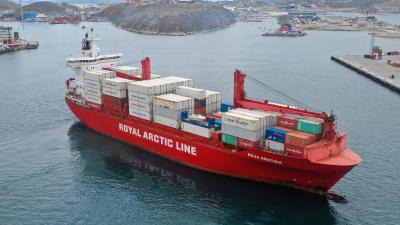
With the grinding of engine parts, the spin of propellers, the pings of navigation tools and all the various parts that make them work, ships are noisy. Until recently, it was thought to be part and parcel of operating a modern, giant vessel. However, the world is becoming increasingly aware of the impact marine noise pollution has on the surrounding environment and the creatures that inhabit it which may already be vulnerable due to past overharvesting and future climate change. Sound travels faster through water than air, and many marine animals rely on it for survival. At the current rate of increase, ship noise doubles every 11.5 years, with rapid increases in previously unused shipping areas such as the Arctic1, home of many marine animals who will be most at risk of harm from ship noise pollution. If we want to protect these animals, their food chains and ecosystems, the problem of man-made underwater sound must be addressed.
Ships create noise from a variety of operations. A ship can be as loud as 190 decibels: louder than a jet on take-off2. The propeller and engines tend to be the noisiest parts of a ship. Propellers create cavitation, which is a myriad of small air bubbles and vortices which implode behind the propeller. Different parts of the propeller produce different types of cavitation, but all are loud3. With many commercial vessels often having two enormous propellers, it is a significant amount of sound.
The grind and clank of engines that operate the ship also radiate noise out into the sea, especially two-stroke diesel engines which are mounted to the ship structure4. Even the movement of the hull through the water contributes to the pollution. This is just the continuous background noise. There are also high intensity sounds like navigation sonar and the fossil fuel industry’s use of sound waves to find oil or gas5. All are noise pollution and can be devastating to the nature around them.
A growing amount of research has been done that shows the significant impact of man-made underwater sound on animals, including but not limited to marine mammals. Narwhals in the Canadian Arctic were observed to change their behaviour to avoid ships as far away as 40 kilometres away, and to be able to hear far lower frequencies than previously assumed, suggesting greater sensitivity to marine traffic6. A general pattern observed among cetaceans is moving away from the vessel and ceasing their vocalisations and foraging behaviour, which impacts socialisation and feeding; critical behaviours for these animals7. Over time, this disruption causes stress, impacting their ability to survive. In extreme cases, such as seismic pile driving for underwater construction, oil and gas exploration, or sonar, cetaceans can be killed, either by stranding or rapid decompression8. Both acute sound and continuous high background noise are harmful to them.
Other sea life is affected too, with underwater noise stressing fish and marine invertebrates, as well as affecting their feeding and reproductive behaviours9. Underwater noise also masks the sounds they use to communicate, making them unable to detect calls from further away10. Like cetaceans, in extreme cases, the sound can injure them, leading to stranding of creatures such as giant squid11. The effects begin from birth: fish embryos as young as three days old have been shown to have negative reactions to noise12.
Sadly, long-term studies on the effects of marine noise on aquatic fauna are lacking, but given what we do know about the stress caused by the disruption of these vital behaviours, a lack of full knowledge is no excuse to not act. Many of these animals are already impacted by other environmental pressures such as climate change. Man-made sound pollution is yet another challenge to their continued survival.
Something must be done, and slowly, governments and the shipping industry are working to address the problem. In 2014, the International Maritime Organization developed guidelines on tackling ship noise, suggesting that ships are built or modified to reduce cavitation formed by the vessel, installing the engine on mounts so noise is not transferred into the hull, and reducing speed unless otherwise necessary. Incentives are suggested such as discounts on port dues or other fees13. y are only guidelines, and not a binding resolution. guidelines were revised in 2024. Yet the individual countries have also begun to commit to reducing noise pollution in their waters, such as the United Kingdom managing noise in its special areas of porpoise conservation and considering noise thresholds while encouraging organisations and a wide swathe of industry to adhere to IMO guidelines14. However, as this is an international phenomenon, with the most vulnerable places such as the Arctic being under multiple jurisdictions, noise pollution in vulnerable shipping lanes has been recommended to be recognised under the IMO’s SOLAS (Safety of Life at Sea) and MARPOL (Marine Pollution) treaties15. In this way, the IMO guidelines could become mandatory across all signatories of those conventions, thus having a greater effect. Another guideline that could be adopted and legislated is speed limits within certain protected zones or channels known to host vulnerable wildlife, which would be easier to enforce if they were included in IMO legislation16. Re-routing is another option, though careful analysis is needed to make sure the new route does not result in the same pressures17.
Technology is also being developed to help reduce noise from vessels. Proposed solutions include noise cancelling technology18, mounting engines on low noise bevels to stop the noise being carried through hulls19, and air lubrication technology to smooth the hull, reducing its drag20. Ring-blade propellers which reduce cavitation have also shown some limited real world use, such as on research vessels21. Some of this technology may also save on fuel, making it economically sound to fit it to vessels. However, others have to be retrofitted, or installed on new vessels, driving up costs, which are always the bottom line for the shipping industry.
As with everything, there are benefits and trade-offs, some of which may be other environmental issues such as fuel consumption. It may be worthwhile to focus first on the noisiest parts such as propellers and engines, or identify and prioritise the noisiest vessels first through measuring and monitoring schemes which are starting up in Europe and elsewhere22. Greater understanding will let regulatory bodies know the scale of the problem, communicate the full impact of the issue to ship owners and create pressure to tackle it.
The benefits of noise reduction to the business combined with stronger legislation will determine how quickly the industry will move to combat this issue. Let us hope it will not be too late for the ecosystems and fauna pushed to their limits by noise pollution. We helped end large scale commercial whaling. Now we have to ensure the continued survival of whales and the creatures they depend on. There is much to do, but many solutions, if the will is there to implement them.
Abrahamsen, Kai. “The Ship as an Underwater Noise Source.” Proceedings of Meetings on Acoustics, Vol. 17. No. 1, 2012, https://doi.org/10.1121/1.4772953.
Andersson, Mathias, et al. "Management measures to reduce continuous underwater noise from shipping." Linnaeus University, Kalmar Maritime Academy, 2023. https://www.diva-portal.org/smash/record.jsf?dswid=9062&pid=diva2%3A1873398.
André, Michel, et al. “Low‐frequency sounds induce acoustic trauma in cephalopods.” Frontiers in Ecology and the Environment, vol. 9, no. 9, 11 Apr. 2011, pp. 489–493, https://doi.org/10.1890/100124.
Bittencourt, L., et al. “Underwater noise pollution in a coastal tropical environment.” Marine Pollution Bulletin, vol. 83, no. 1, June 2014, pp. 331–336, https://doi.org/10.1016/j.marpolbul.2014.04.026.
Borelli, Davide, et al. “Holistic control of ship noise emissions.” Noise Mapping, vol. 3, no. 1, 25 Apr. 2016, https://doi.org/10.1515/noise-2016-0008.
Bosschers, Johan. “The EU’s Saturn Project Aims to Reduce Underwater Noise from Shipping.” WWF Arctic, 7 Dec. 2023, www.arcticwwf.org/the-circle/stories/the-eus-saturn-project-aims-to-reduce-underwater-noise-from-shipping/.
De Jong, Karen, et al. “Trade-offs and synergies in the management of environmental pressures: A case study on ship noise mitigation.” Marine Pollution Bulletin, vol. 218, Sept. 2025, p. 118073, https://doi.org/10.1016/j.marpolbul.2025.118073.
Erbe, Christine, et al. “The effects of ship noise on marine mammals—a review.” Frontiers in Marine Science, vol. 6, 11 Oct. 2019, https://doi.org/10.3389/fmars.2019.00606.
Ewing, Jack P., et al. “Narwhal acoustic presence in Eclipse Sound, Nunavut: Relationships with sea ice and responses to ships.” Scientific Reports, vol. 15, no. 1, 2 July 2025, https://doi.org/10.1038/s41598-025-04032-1.
“The Impacts of Underwater Noise on Marine Life.” OceanCare, 15 June 2023, www.oceancare.org/en/stories_and_news/underwater-noise-impacts/.
Jalkanen, Jukka-Pekka, et al. “Underwater Noise Emissions from ships during 2014–2020.” Environmental Pollution, vol. 311, Oct. 2022, p. 119766, https://doi.org/10.1016/j.envpol.2022.119766.
Leaper, Russell, et al . “ Reducing underwater noise from large commercial ships: current status and future directions”’. Journal of Ocean Technology, vol. 9, 014, pp. 65–83.
Mannherz, Fabienne, et al. “Noise pollution from Arctic expedition cruise vessels: Understanding causes, consequences and governance options.” Npj Ocean Sustainability, vol. 3, no. 1, 10 Oct. 2024, https://doi.org/10.1038/s44183-024-00089-z.
Nelson, Reagan. “Why All the Concern about Underwater Ship Noise?” Natural Resources Defence Council, 23 Feb. 2023, www.nrdc.org/bio/regan-nelson/why-all-concern-about-underwater-ship-noise.
“Quieter Ship Design: Tackling Engine and Other Machinery Noise.” Clear Seas, 21 July 2025, https://clearseas.org/insights/quieter-ship-design-tackling-engine-and-other-machinery-noise/.
“Reducing Marine Noise.” GOV.UK, 21 Jan. 2025, www.gov.uk/government/publications/reducing-marine-noise/reducing-marine-noise. Accessed 19 Apr. 2026.
“Reducing Ships’ Noise Pollution.” SINTEF, 5 Feb. 2025, www.sintef.no/en/latest-news/2025/reducing-ships-noise-pollution/.
“Ship Noise.” International Maritime Organization, www.imo.org/en/mediacentre/hottopics/pages/noise.aspx. Accessed 18 Apr. 2026.
Taylor, Craig. “Reducing underwater noise from shipping.” Kongsberg Maritime, www.kongsbergmaritime.com/feature_articles/2024/8/reducing-underwater-noise-from-shipping/. Accessed 19 May 2026.
“Underwater Noise.” EMSA, www.emsa.europa.eu/protecting-the-marine-environment/underwater-noise.html. Accessed 19 Apr. 2026.
“Underwater Noise.” WWF Arctic, 7 Aug. 2024, www.arcticwwf.org/threats/underwater-noise/.
Vakili, S.V., et al. “The development of a policy framework to mitigate underwater noise pollution from commercial vessels.” Marine Policy, vol. 118, Aug. 2020, p. 104004, https://doi.org/10.1016/j.marpol.2020.104004.
Vasconcelos, Raquel O., et al. “Effects of ship noise on the detectability of communication signals in the Lusitanian toadfish.” Journal of Experimental Biology, vol. 210, no. 12, 15 June 2007, pp. 2104–2112, https://doi.org/10.1242/jeb.004317.
Weilgart, Lindy. The Impact of Ocean Noise Pollution on Fish and Invertebrates. Report for OceanCare, Swtizerland, 2018. https://tethys.pnnl.gov/sites/default/files/publications/Weilgart_2018.pdf
Jalkanen, Jukka-Pekka, et al. “Underwater noise emissions from ships during 2014–2020.” Environmental Pollution, vol. 311, Oct. 2022, p. 119766, https://doi.org/10.1016/j.envpol.2022.119766.
Nelson, Regan. “Why all the concern about underwater ship noise?” Expert Blog, Natural Resources Defence Council, 3 Feb. 2023. www.nrdc.org/bio/regan-nelson/why-all-concern-about-underwater-ship-noise. Accessed 19 Apr. 2026.
Abrahamsen, Kai. “The ship as an underwater noise source.” Proceedings of Meetings on Acoustics, Vol. 17. No. 1, 2012, https://doi.org/10.1121/1.4772953.
Borelli, Davide, et al. “Holistic control of ship noise emissions.” Noise Mapping, vol. 3, no. 1, 25 Apr. 2016, https://doi.org/10.1515/noise-2016-0008.
“Underwater Noise.” EMSA, www.emsa.europa.eu/protecting-the-marine-environment/underwater-noise.html. Accessed 19 Apr. 2026.
Ewing, Jack P., et al. “Narwhal acoustic presence in Eclipse Sound, Nunavut: Relationships with sea ice and responses to ships.” Scientific Reports, vol. 15, no. 1, 2 July 2025, https://doi.org/10.1038/s41598-025-04032-1.
Erbe, Christine, et al. “The effects of ship noise on marine mammals—a review.” Frontiers in Marine Science, vol. 6, 11 Oct. 2019, https://doi.org/10.3389/fmars.2019.00606.
“The Impacts of Underwater Noise on Marine Life.” OceanCare, 15 June 2023, www.oceancare.org/en/stories_and_news/underwater-noise-impacts/.
Weilgart, Lindy. “The Impact of Ocean Noise Pollution on Fish and Invertebrates.”, Report for OceanCare, Swtizerland, 2018. https://tethys.pnnl.gov/sites/default/files/publications/Weilgart_2018.pdf
Vasconcelos, Raquel O., et al. “Effects of ship noise on the detectability of communication signals in the Lusitanian toadfish.” Journal of Experimental Biology, vol. 210, no. 12, 15 June 2007, pp. 2104–2112, https://doi.org/10.1242/jeb.004317.
André, Michel, et al. “Low‐frequency sounds induce acoustic trauma in cephalopods.” Frontiers in Ecology and the Environment, vol. 9, no. 9, 11 Apr. 2011, pp. 489–493, https://doi.org/10.1890/100124.
Weilgart, Lindy. “The Impact of Ocean Noise Pollution on Fish and Invertebrates.”, Report for OceanCare, Swtizerland, 2018. https://tethys.pnnl.gov/sites/default/files/publications/Weilgart_2018.pdf
“Ship Noise.” International Maritime Organization, www.imo.org/en/mediacentre/hottopics/pages/noise.aspx. Accessed 18 Apr. 2026.
“Reducing Marine Noise.” GOV.UK, 21 Jan. 2025, www.gov.uk/government/publications/reducing-marine-noise/reducing-marine-noise. Accessed 19 Apr. 2026.
Mannherz, Fabienne, et al. “Noise pollution from Arctic expedition cruise vessels: Understanding causes, consequences and governance options.” Npj Ocean Sustainability, vol. 3, no. 1, 10 Oct. 2024, https://doi.org/10.1038/s44183-024-00089-z.
Andersson, Mathias, et al. "Management measures to reduce continuous underwater noise from shipping." Linnaeus University, Kalmar Maritime Academy , 2023. https://www.diva-portal.org/smash/record.jsf?dswid=9062&pid=diva2%3A1873398.
De Jong, Karen, et al. “Trade-offs and synergies in the management of environmental pressures: A case study on ship noise mitigation.” Marine Pollution Bulletin, vol. 218, Sept. 2025, p. 118073, https://doi.org/10.1016/j.marpolbul.2025.118073.
“Quieter Ship Design: Tackling Engine and Other Machinery Noise.” Clear Seas, 21 July 2025, https://clearseas.org/insights/quieter-ship-design-tackling-engine-and-other-machinery-noise/.
“Reducing Ships’ Noise Pollution.” SINTEF, 5 Feb. 2025, www.sintef.no/en/latest-news/2025/reducing-ships-noise-pollution/.
Bosschers, Johan. “The EU’s Saturn Project Aims to Reduce Underwater Noise from Shipping.” WWF Arctic, 7 Dec. 2023, www.arcticwwf.org/the-circle/stories/the-eus-saturn-project-aims-to-reduce-underwater-noise-from-shipping/.
Taylor, Craig. “Reducing underwater noise from shipping.” Kongsberg Maritime, www.kongsbergmaritime.com/feature_articles/2024/8/reducing-underwater-noise-from-shipping/. Accessed 19 May 2026.
Leaper, Russell, et al. “Reducing underwater noise from large commercial ships: current status and future directions”. Journal of Ocean Technology, vol. 9, 2014, pp. 65–83.
Explore the behind the scenes process of filming the Argentina, a 'votive', the Aeolus and the East Indiaman ship models at the National Maritime Museum, Sweden.
Explore the behind the scenes filming of the Cold War Rail Ferry, Oasis of the Seas, Stena Drillmax and Olympic Loyalty ship models at the IMO's headquarters.
A behind the scenes look at the process of filming HMS Vanguard, HMS Prince, Campania and Océan at the Science Museum's National Collections Centre, Swindon.


.jpg)
