


Theme 1: Lloyd’s Register Collection - Safeguarding Old Knowledge, and Corporate Memory
Ensuring preservation and sustainability of historic records, while fostering trust and accessibility to make the collection available worldwide.
This page is approximately a 13 minute read
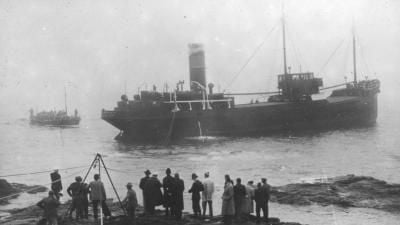
Since 1760 Lloyd’s Register has surveyed and inspected vessels, though very few records have survived from this period. From 1834, official records of Lloyd’s Register’s surveying, classification and design approval exist, in addition to publications like the Register of Ships, Register of Yachts, research papers, and the rules and regulations governing the ongoing changes to vessel and machinery construction. Governance records detailing classing decisions, rules and regulations, and responses to changing methods of shipbuilding and technology, offer unique insight into the development of safety at sea. Additionally, records kept for other amalgamated classification bodies like the Liverpool Underwriters’ Registry for Iron Vessels, as well as the British Corporation Register of Shipping provide a wider perspective on industry changes to inspection and safety. Lastly, acquired collections, such as the Frank Strike Collection of magic lantern slides focuses on shipwrecks, rescues, salvage, and displays of lifesaving equipment, another core element of safety at sea.
Primarily concerned with safety at sea, Lloyd's Register (LR) has continually produced pioneering engineering research to improve vessel safety. The first Rules for the Classification of Ships were released in 1834, with the reconstitution of the Society. The Rules (LR/5/1/2) have been published in various forms throughout Lloyd’s Register’s history and play a critical role in assuring the safety and quality of ship construction and maintenance. They provide the rationale for how surveys, inspections, and certification was conducted by surveyors, the evidence for this being the Ship Plans and Survey Reports (see Classification and Survey under LR/5/3). They have been a constant companion to thousands of surveyors, shipowners, and shipbuilders across the globe, and offer a fascinating insight into technological and safety developments within the maritime industry. See below for a timeline of the changes and updates to the rules and regulations.
To examine survey reports and adjudicate on the assignment of classification for vessels inspected by surveyors, a Classification Committee was formed in 1835 (see LR/1/1/3). Made up of ship underwriters and ship owners, members of the General Committee in London would take turns to attend meetings of the Classification Committee throughout the year. Some of the earlier minutes for the Classing Committee can be found within the General Committee minute books. After legislation was introduced in the 1930's making freeboard mandatory for all seafaring vessels, Lloyd's Register was requested by the UK Government to issue freeboard certificates and resulted in the development of a Freeboard department, the freeboard submission books LR/1/1/3/5 are reflective of this work. The records of the committee comprise minutes, submission books (lists of classed vessels reviewed by the committee), Casualties Submitted (lists of classed vessels lost at sea, foundered, sunk or otherwise wrecked), attendance books and reports and memoranda. A fundamental body of LR, the committee’s work has provided the operational enforcement of the rules in assigned freeboard and class notations and reviewing the work of surveyors. At their core, the committee’s records reflect a steadfast commitment to safety at sea.
From 1835 LR formed the Sub-Committee for Surveyors (see LR/1/1/2), which informed the governing General Committee of proposals for rule requirements and amendments, based upon their knowledge, experience and research. Despite having final approval of the rules, the General Committee (GC), under the Society's constitution, consisted of merchants, underwriters, and shipowners with limited technical knowledge of shipbuilding. Therefore, the GC relied on the technical advice of the Principal Surveyor when discussing submissions from the Sub-Committee for Surveyors on amendments to the rules or adoption of new ones.
As the industry developed, the technical details of the Rules required more effort, and the need for the contributions of shipbuilders, steelmakers, forgemasters and engineers became more apparent. To address the issue, the GC formed the Technical Sub-Committee (TC) in 1891 (see LR/1/1/6). The Technical Committee would consider questions of framing or altering rules for constructing ships and machinery. From this point LR could embrace industrial innovation from shipbuilders and naval engineers, whilst ensuring that safety and technical integrity were not compromised. Running in parallel to the Sub-Committee for Surveyors, the TC would later supersede it.
The Proving House Committee (see LR/1/1/5) also represents another important aspect of LR’s safety governance. The Committee was established in late 1863 and was dissolved in 1943. Rules were issued in 1860 requiring all anchors and cables for LR classed vessels to be tested and certified, an undertaking since 1808. They later worked across other sites in Netherton and Tipton. After the Board of Trade amendments to the Chain and Anchor Testing Act in 1872, Lloyd's Register was among the few Proving Houses with a license for issuing certificates, with penalties given for gaining certificates from any other Machines. General Superintendents were appointed by Lloyd's Register to oversee local superintendents inspecting anchors and chain cables across the country. The records of this committee are minute books, meetings agendas, issued certificates, and publications produced.
Other temporary special sub-committees were set up in response to wider technological changes and developments in shipping. Typically, these committees were formed by one of the above with the chief aim of reporting on a given issue for which LR’s rules or official approach may be out of step. These include the Special Sub-Committee to consider a revision to the Rules and Regulations, 1909 (see LR/1/1/12), Special Sub-Committee to consider a revision to the Rules and Regulations, 1909 (see LR/1/1/14), Special Sub-Committee for the Classification of Composite and Steel Yachts (see LR/1/1/16). Minutes, correspondence, and rules are often the output of such special sub-committees, and are particularly useful in understanding the Society’s improvements to emerging safety challenges.
Comprising minutes, circulars, reports and correspondence books for the above committees, the activities documented offer valuable perspectives on the formation, modification and enforcement of the rules was undertaken in the pursuit of safety at sea.
The principal output and earliest records produced by Lloyd’s Register’s earliest incarnation, the Society for the Registry of Shipping, are the Register of Ships or Register Books (see LR/5/1/1). It has also sometimes been referred to as The Shipping Bible. They record data on the condition and classification of vessels, initially over 50 tonnes, but later increased to 100 tonnes. The Books are arranged alphabetically and include a list of committee members and surveying staff from 1830's onwards, with rules and regulations also included in the earliest editions. The oldest extant Register Book is from 1764 and covers the years 1764-1768, after which it is published annually. Updated each year, they represent the culmination of LR’s inspections and surveys, as found in the Classification and Survey series (see LR/5/3), and the Rules and Regulations (see LR/5/1/2). Supplements produced each year offered additional information, often as provided by the owner of the vessel. They could include changes of ownership, the fate of vessels or even detail new vessels. They are a crucial record in the development and improvement of safety at sea. This series has been digitised and can be accessed via the Heritage Centre website.
Published annually from 1878 to 1980 (except during the years 1916-18 and 1940-46), the Register of Yachts (see LR/5/1/3) works in much the same way as the Register of Ships. Two supplements containing additions and corrections were also issued annually. Digitised copies of this can be found on the Heritage Centre’s website.
Information collected for the purposes of the Register of Ships was also used for the formation of other publications such as the Casualty Returns or Wreck Returns (see LR/5/1/7). These bound volumes comrpise tables with data on ship wrecks and casualties. They list the circumstance (cause of disaster), vessel name, number in the Register Book, date of disaster, tonnage of vessel, cargo (if known), nationality and description (type of vessel). Also Included are summaries of shipwrecks and casualties for Steam and Sailing vessels for relevant years. These offer a useful summary of maritime disasters and losses. Digital copies can be accessed on the Heritage Centre website.
Always at the cutting edge of research and innovation, the records of the Lloyd’s Register Staff Association, later the Lloyd’s Register Technical Association (see LR/5/6/1) was established in 1920 to share technical expertise and knowledge within Lloyd’s Register. Whilst they were usually used to increase LR’s competitive advantage in the industry, researches will find that they are also a valuable record of industrial responses to disasters, accidents and incidents. These too have been digitised and can be found on our website.
Over the years, Lloyd’s Register has merged with other classification bodies, freeboard authorities and maritime information/intelligence organisations.
The Liverpool Underwriters’ Registry for Iron Vessels, established in 1862 operated as a rival to Lloyd’s Register until they were merged in 1885. Formed out of what was felt to be a deficiency in the rules and regulations for iron vessels, an increasing presence at major ports such as Liverpool, it offered pioneering approaches surveying and classification. Records of its surveying, classification, publications and governance can be found under the reference LURIV.
Formed in 1890 in Glasgow, the British Corporation Register of Shipping was a classification body and freeboard assigning authority which existed in direct competition with Lloyd’s Register until the two finally merged in 1949. Records of its governance, surveying operations, and rules and regulations can be found under the collection reference BCR1.
Established in 1971 as a guide for vessels navigating commercial ports and terminals worldwide, the Guide to Port Entry, produced by OneOcean is another fascinating resource for researchers investigating safety at sea. Combined with their other publication, The Ships Atlas (from 1984) offer unique perspective on a wide range of factors affecting how ports are accessed, as well as the challenges likely to be faced. A crucial guide for vessels, they also offer a look at how ports have changed and expanded. To the year 1999, these publications have been digitised and can be found on the Heritage Centre website.
Purchased at auction in 2023, the Frank Strike Collection of magic lantern slides is a unique record of Cornish shipwrecks and lifeboat rescues and salvage operations from the 1880s-1960s. In addition to being a unique but tragic record of disaster, loss and accidents, these records also showcase examples of lifesaving kit and equipment, as well as coastal rescues. These can be found within the collection reference FS.
Internal publications such as the Lloyd's Register 250 Years of Service, Nigel Watson (London, 2010), and the History of Shipbuilding for further information on safety in shipping.
Resources and publication produced by the International Maritime Organisation (IMO), e.g. the catalogue and code listing for rules, regulations and conventions etc.- https://www.imo.org/en/publications/pages/catalogueandbookcodelists.aspx
Reports, data portal and published material from the Marine Accident Investigation Branch (MAIB): https://www.gov.uk/government/organisations/marine-accident-investigation-branch
1834/35 - Rules for the Classification of Ships
1854 - Provisional Rules for Iron Ships
1855 - Rules for Iron Ships
1863 - Revised Rules for Iron Ships
1868 - Rules for Composite Ships
1870 - Revised Rules for Iron Ships
1879 - Rules for the Classification of Yachts
1885 - Rules for Machinery
1888 - Rules for Steel Ships
1889 - Rules for Steel Yachts
1889 - Rules for Iron and Steel Vessels
1891/92 - Rules for Panting Arrangements
1892 - Provisional Rules for Large Single Deck Vessels
1894 - Rules for Electric Light onboard Ships
1896 - Rules for Turret Deck Vessels
1898 - Rules for Refrigerating Machinery
1900 - Revised Rules for Steel Testing
1902 - Rules for the Burning and Carriage of Liquid Fuel
1903/04 - Revised Rules for Large Single Deck Vessels
1906 - Revised Rules for Steel Testing
1907 - Rules for the Construction of Yachts of the International Rating Class
1908 - Revised Requirements for Testing of Oil Tanks in Ships Intended To Carry Petroleum In Bulk
1908 - Rules for Wood and Composite Yachts
1908/09 - Revised Rules for Steel Ships
1909 - Rules for Carrying Oil in Bulk
1909 - Rules for the Construction of Oil Tankers
1909/10 - Rules for Marine Internal Combustion Engines
1910 - Rules for Petrol and Paraffin Engines
1912/13 - Revised Rules for the Burning and Carriage of Liquid Fuel
1913 - Revised Rules Regarding Life Saving Appliances
1914 - Rules for Diesel Engines and Their Auxiliaries
1914/15 - Rules for Determining Minimum Sizes of Shafts for Steam Turbines
1918 - Provisional Rules for Construction and Classification of Ships Lifeboats
1918 - Provisional Rules for Electrically Welded Ships
1920 - Revised Rules for Electrical Installations
1921 - Revised Rules for Steel Ships
1921 - Revised Rules for Construction of Yachts of the International Rating Class
1922 - Rules for Water Tube Boilers
1923 - Rules for Strengthening for Navigation in Ice
1925 - Rules for Electric Welding
1925 - Revised Rules for the Construction of Oil Tankers
1925/26 - Rules for Steel Trawlers
1927 - Revised Rules for Wood and Composite Yachts
1928/29 - Rules for Petroleum Tank Barges on the River Thames
1928/29 - Provisional Rules for Heavy Oil Engines
1932 - Revised Rules for Welded Construction and for the Testing of Electrodes
1933/34 - Provisional Rules for Electrically Propelled Vessels
1934 - Requirements for Fusion Welded Pressure Vessels for Land Use
1937 - Revised Regulations for the Testing of Electrodes
1948 - Revised Rules for the Construction of Oil Tankers
1949 - Rules for Cargo Ships
1949/50 - Rules for Petroleum Tankers
1949/50 - Rules for Pumping and Piping
1951 - Revised Rules for Heavy Oil Engines
1952 - Provisional Rules for Welding of Aluminium Alloys in Ship Construction
1953 - Revised Rules for Quality and Testing of Materials
1954 - Revised Rules for Construction of New Refrigerated Cargo Installations
1955 - Revised Rules for Ships Carrying Ore
1955 - Revised Rules for Steel Trawlers
1956 - Revised Rules for the Construction of Ships
1956 - Revised Rules for the Construction of Machinery (Superheater Tubes and Pressure Pipes of Boilers)
1956 - Revised Rules for Construction of Composite Yachts
1957 - Provisional Rules for the Construction of Yachts Using Fibreglass-Reinforced Plastic Hulls
1957 - Revised Rules for Construction of Yachts of the International Rating Class
1958 - Rules and Regulations for Welded Structures for Steam Reciprocating Heavy Oil Engines
1958 - Revised Requirements for Use of Aluminium Alloys in Ship Construction
1958 - Revised Rules for the Construction of Trawlers
1959 - Rules for the Design of Tankers
1960 - Provisional Rules for the Construction and Classification of Nuclear Powered Ships
1961 - Revised Rules for Electrical Equipment and Electric Propelling Machinery
1961 - Provisional Rules for Liquefied Gas Carriers
1961 - Provisional Rules for the Construction of Reinforced Plastic Yachts
1963 - Rules for Automation in Ships
1963 - Rules for Bulk Carriers
1963 - Rules for Dredgers and Hopper Barges
1963 - Provisional Requirements for Use of Methane Gas as a Fuel
1964 - Revised Rules for Liquefied Gas Carriers
1964 - Revised Rules Applying to Large Tankers, Ore Carriers and Bulk Carriers
1964 - Provisional Rules for the Construction of Reinforced Plastic Yachts
1965 - Revised Rules for Dry Cargo Ships
1965 - Provisional Rules for Reinforced Plastic Fishing Craft
1965 - Rules for Automatic Control in Ships
1966 - Provisional Requirement for Classification of Air Cushion Vehicles
1967 - Guidance Notes for Classification of Offshore Platforms
1968 - Rules for Control Engineering Systems
1969 - Preparation of Rules for the Construction and Classification of Self-Propelled and Non-Self-Propelled Steel Barges in Service on Inland Waterways
1969 - Revised Rules for Construction of Yachts of the International Rating Class
1970 - Rules for Inland Waterway Vessels
1970 - Rules for Dredgers
1970 - Rules for Liquid Chemical Carriers
1971 - Provisional Rules for Offshore Platforms
1972 - Rules for Construction and Classification of Mobile Offshore Units
1973 - Rules for Submersibles
1973 - Rules for Floating Docks
1975 - Revised Rules for Liquefied Gas Carriers
1976 - Rules for Refrigerated Stores
1977 - Quality Assurance Scheme for Marine Machinery
1977 - Provisional Rules for Factory Process Ships
1979 - Rules for Fire Fighting Vessels
1979 - Guidance Notes for the Classification of Dynamic Positioning Systems
1980 - Guidance Notes for the Construction and Classification of Oil Recovery Vessels
1980 - Rules and Regulations for the Construction and Classification of Submersibles and Diving Systems
1980 - Guidance Notes for the Burning of Coal in Ships' Boilers
1981 - Code for Lifting Appliances in a Marine Environment
1981 - Rules for Dynamic Positioning Systems
1981 - Revised Rules for the Classification of Inland Waterways Ships
1983 - Revised Rules for Mobile Offshore Units
1985 - Rules for Offshore Well Stimulation Ships
1986 - Provisional Rules for Sail Assisted Ships
1986 - Provisional Rules for Shipborne Navigational Facilities and Ships Manoeuvring Capability
1988 - Rules for Fixed Offshore Installations
1996 - Rules for Special Service Crafts
2000 - Rules for Naval Ships
Ensuring preservation and sustainability of historic records, while fostering trust and accessibility to make the collection available worldwide.
Discover the unique story of an unlikely 101-year-old treasure. This blog uncovers the story behind a simple cheque, tucked away in a cupboard.
Details on the staffing and employment records of Lloyd's Register in the UK and Ireland since 1833. These resources include officer lists, letterbooks, salary information, and social club records -particularly from the Cricket Club.

