




Theme 3: Safety – Shipwrecks and Maritime Disaster
Learning from past maritime disasters to develop a global perspective and integrate lessons learned to advance maritime safety, resilience and sustainability.
This page is approximately a 9 minute read
Anna Grybenyuk, Researcher
Anna Grybenyuk graduated from the University of St Andrews with a degree in Modern History and Russian in 2016, then again with an MLitt in Museum and Gallery Studies in 2020. Much of her knowledge of fishing and maritime activity comes from working at the Scottish Fisheries Museum, and from living so long by the coast. She currently works in Oxford, managing digital collections for the Pitt Rivers Museum and History of Science Museum. It is far from the sea, but she will take any opportunity to head back to the coast to spot birds and boats alike.
When one thinks of maritime pollution, most think of plastics, crude oil spills from tankers or drilling platforms, or accidental spillage from a ship as it journeys across the sea. Few think of the danger that lurks below the waves in the form of fuel oil from wrecks on the ocean floor. UNESCO estimates there are three million shipwrecks at the bottom of the sea1. Not all of these pose a danger, but an estimated 8,500 wrecks around the world, mainly from the two World Wars, risk leaking six billion gallons of fuel oil and other pollutants into the oceans within the next ten years2. These are dubbed “potentially polluting wrecks”. Dealing with them, however, is no easy task.
The problem of polluting shipwrecks is a uniquely 20th and 21st century problem. Pre-modern wood wind-powered ships would simply rot away when sunk. The 20th century saw both a revolution in ship building, and a large scale naval build-up, culminating in two World Wars, during which thousands of metal ships powered by heavy fuel oil and carrying dangerous cargo were destroyed and sunk3. At the time, there were more pressing worries than these ships and any pollutants they may leak. Almost a century later, however, as these ships decay and our awareness of humanity’s environmental impact becomes greater, the issue of these pollutants has come back into the discussion. Stronger storms caused by climate change exacerbate the problem by disturbing these wrecks and whipping up the toxins lurking within their hulls. Other activities that could cause an oil release are bottom trawling or construction4, both of which are increasing in the modern world to keep up with our demands. The risk of an accidental environmental disaster then, is increased, and the need to mitigate it becomes even more pressing.
The normal method of making these wrecks safe is pumping oil any oil and/or removing other environmental hazards from their hulls and pipes. A valve is installed and the oil is vacuumed out to tanks on the surface. This is known as “hot tapping”5. In theory, it can be done to a wreck at any depth. Technology is no objection; what is critical is how much the ship owner is willing to pay and what standard they must comply to; deeper wrecks incur greater costs6. Due to expense, clean-up like this is often done on an ad-hoc basis, either when a wreck begins to leak or is highlighted in a risk assessment as an imminent danger. There are many systems to assess this risk, such as VRAKA in Sweden, which looks at, among other factors, depth of the wreck, what hazards exist in the location like marine traffic or trawling, hull thickness, and age of the wreck7. Such tools are useful starting points, but they are only as good as the data the assessors have. Many wrecks are remote and difficult to access. Estimation the corrosion rate of a wreck is also difficult. The location of a wreck may not even be known, and thus monitoring its condition is impossible8.
To remedy this, surveys have been undertaken all over the world to identify wrecks at high risk of leaking. In 2002, following the identification of oil leaks in San Francisco Bay as coming from the wreck of SS Jacob Luckenbach, the National Oceanic and Atmospheric Administration (NOAA) began compiling a database known as Resources and UnderSea Threats (RUST)9. In 2013, they completed a survey started three years earlier on behalf of the US government mapping potentially leaking shipwrecks. The project, known as Remediation of Underwater Legacy Environmental Threats (RULET), identified eighty seven wrecks for risk assessment, of which thirty six were deemed to be high risk10. However, such work is difficult and expensive. Twelve years on, this survey has yet to be updated, during which time, more wrecks could have become high risk. Other initiatives are in progress, however. Lloyd’s Register are using their archives and seabed scanning to locate wrecks, having found 129 in the Irish Sea as of 202311. Work in the British Isles is the most critical; this is the area with the most shipwrecks, due to seeing the most activity during the World Wars. Wales may be the only country that has attempted this, and calculated a total of 650 shipwrecks in their waters.12
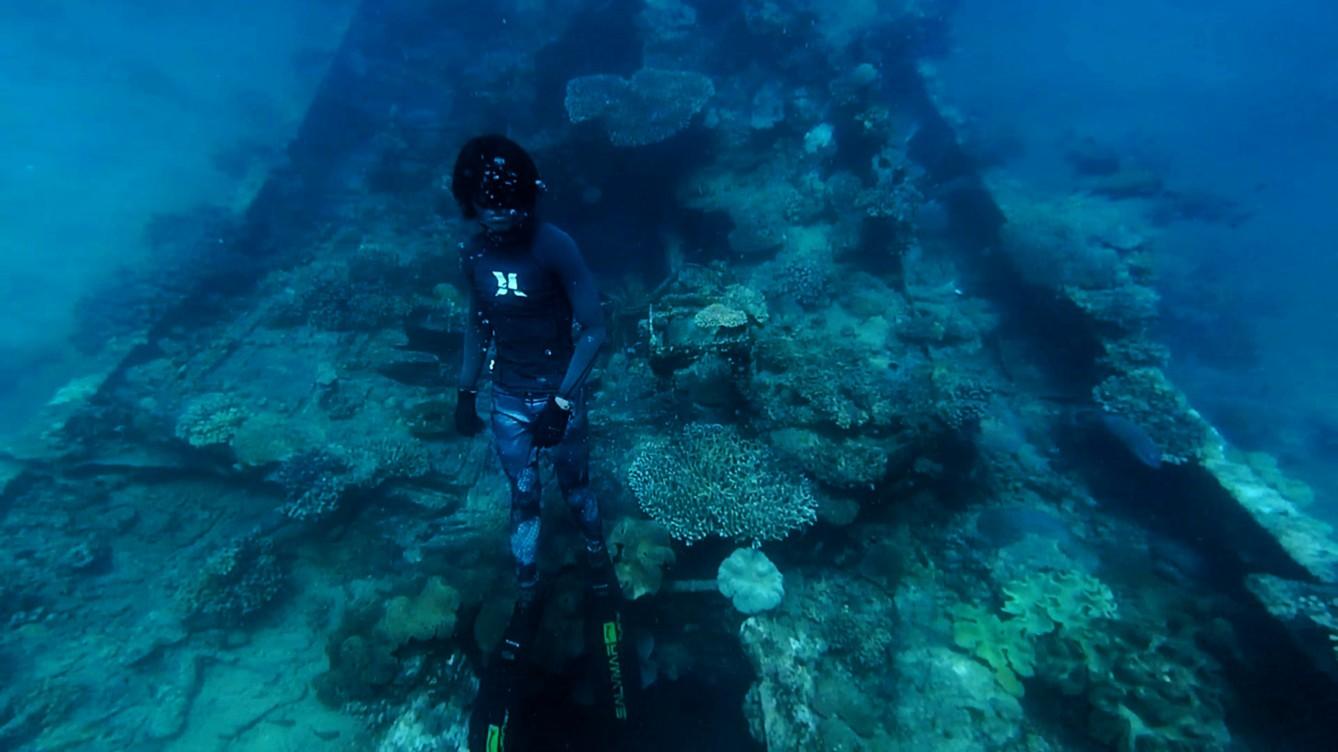
There are further complications to cleaning up wrecks. Many are historic sites or war graves. The USS Arizona in Pearl Harbour cannot be treated due to the many dead entombed within; the spills can only be cleaned up as they come13. Ships may also have become artificial reefs, with creatures colonising them oblivious to the danger inside. Shipwrecks around Scapa Flow are protected in part due to the recognition of their biodiversity14.
Wrecks can furthermore hold significance to the local community, whether through economic benefit through tourism or an anchor for identity15. On top of all this, shipwrecks are owned by the countries they sailed for. While not an issue in the North Sea, Second World War wrecks in the Pacific from the Japanese and American navies are still the responsibility of those countries, despite being in other territories. They maintain sovereignty and duty of care even over a wreck thousands of miles away with no effect on their countries16. However, because it does not impact them directly, they may be less proactive. Balancing the clean-up with protecting these places and respecting maritime law is a delicate and critical process.
However, the economic damage of leaving the wrecks alone would be even greater. Potential effects are twofold: to the environment and to people. Wildlife is affected both immediately and in the aftermath due to reduced fitness from pollutants in their systems. People’s health is similarly affected, but also suffer loss of tourism, cost to fisheries, and the cost of environmental clean-up and monitoring17.
When USS Mississinewa, a US second World War tanker, began leaking in Micronesia, it damaged fisheries the local people relied upon, impacting their traditional livelihood and health, compounded by their remoteness and need for involvement from the United States18. This is a good demonstration of how the Global South is particularly vulnerable to this issue, as its people rely on the sea for food, and are limited in their ability to mitigate such disasters. As with much in the world, the response is highly unequal, and thus more global cooperation is needed to address the unfair burden and disproportionate impact of this disaster on the world’s poorest. It is imperative for all bodies involved to understand the danger and come together to do something about the oil, explosives, and toxic chemicals lurking in rotting hulks of ships that had sunk decades ago, lest they come back to haunt us with a vengeance.
“Potentially Polluting Wrecks: Defusing the Ticking Timebomb.” LR, Lloyd’s Register, 14 Dec. 2023, www.lr.org/en/knowledge/horizons/december-2023/potentially-polluting-wrecks-defusing-the-ticking-timebomb/.
“Shipwrecks and the Marine Environment – Friends or Foes?” Maritime Archaeology Trust, 17 Jan. 2023, maritimearchaeologytrust.org/4162-hljaov/.
“The History of the Rulet Database.” Office of Response and Restoration, NOAA, 20 May 2022, response.restoration.noaa.gov/oil-and-chemical-spills/history-rulet-database.
Ashworth, James. “World War Shipwrecks Are Leaking Pollutants into the World’s Oceans.” Natural History Museum, 18 Oct. 2022, www.nhm.ac.uk/discover/news/2022/october/world-war-shipwrecks-leaking-pollutants-into-worlds-oceans.html.
Barrett, Michael J. “Potentially Polluting Shipwrecks- Spatial Tools and Analysis of WWII Shipwrecks.” DukeSpace, Duke University, 27 Apr. 2011, https://dukespace.lib.duke.edu/server/api/core/bitstreams/e626a576-80ef-4fd7-a7a6-92c05df172f4/content. Accessed 19 May 2025.
Basta, Daniel J., et al. NOAA, 2013, Risk Assessment for Potentially Polluting Wrecks in U.S. Waters, https://nmssanctuaries.blob.core.windows.net/sanctuaries-prod/media/archive/protect/ppw/pdfs/2013_potentiallypollutingwrecks.pdf. Accessed 19 May 2025.
Bezerra, Luis Ernesto, et al. “Historical shipwrecks in international waters contributes to coastal pollution.” Ocean and Coastal Research, vol. 72, 2024, https://doi.org/10.1590/2675-2824072.23074.
Carter, Matthew, et al. “Ticking ecological time bombs: Risk characterisation and management of oil polluting World War II shipwrecks in the Pacific Ocean.” Marine Pollution Bulletin, vol. 164, Mar. 2021, p. 112087, https://doi.org/10.1016/j.marpolbul.2021.112087.
Girin, Michel. “European experience in response to potentially polluting shipwrecks.” Marine Technology Society Journal, vol. 38, no. 3, 1 Sept. 2004, pp. 21–25, https://doi.org/10.4031/002533204787511363.
Goodsir, Freya. “Assessing and monitoring the impacts of a hidden legacy of pollution from World War shipwrecks.” 5th Premiam Conference, 22nd June 2022, Amsterdam RAI, Europaplein 24, 1078 GZ Amsterdam, Netherlands, Conference Presentation, https://www.cefas.co.uk/media/k3tf2lgw/assessing-and-monitoring-the-impacts-of-a-hidden-legacy-of-pollution-from-world-war-shipwrecks.pdf
Helton, Doug. “Preventing Marine Pollution through a Historic Shipwreck Database.” Preventing Marine Pollution through a Historic Shipwreck Database | NOAA’s Office of Response & Restoration Blog, 1 Oct. 2021, blog.response.restoration.noaa.gov/preventing-marine-pollution-through-historic-shipwreck-database.
Hill, Polly Georgiana, and Sue Jane Rodway-Dyer. ‘Decolonising Environmental Risk Assessments of Potentially Polluting Wrecks: A Case Study of the Wreck of the USS Mississinewa in Ulithi Lagoon, Federated States of Micronesia’. Environmental Management, vol. 73, no. 5, Springer Science and Business Media LLC, May 2024, pp. 973–984, https://doi.org/10.1007/s00267-023-01929-3.
Hoskin, Rowenna. “Will Climate Change Make Shipwrecks Pollute the Sea?” BBC News, BBC, 13 Oct. 2024, www.bbc.co.uk/news/articles/c0jp0qq07pvo.
Kamm, Nadia. “An Overview of Pollution from Shipwrecks.” Open UCT, University of Cape Town, 30 July 2014, https://open.uct.ac.za/server/api/core/bitstreams/0d290400-5da4-4d4d-a010-32305fc3dbeb/content. Accessed 19 May 2025.
Landquist, H., et al. “Evaluating the needs of risk assessment methods of potentially polluting shipwrecks.” Journal of Environmental Management, vol. 119, 15 Apr. 2013, pp. 85–92, https://doi.org/10.1016/j.jenvman.2012.12.036.
Landquist, Hanna, Lars Rosén, et al. “Vraka—a probabilistic risk assessment method for potentially polluting shipwrecks.” Frontiers in Environmental Science, vol. 4, 22 July 2016, https://doi.org/10.3389/fenvs.2016.00049.
Lindgren, J. Fredrik, et al. ‘Polluting Shipwrecks in Swedish Waters: Investigations, Risk Assessment Methodology and Oil Removal Operations’. International Oil Spill Conference Proceedings, vol. 2021, no. 1, International Oil Spill Conference, May 2021, https://doi.org/10.7901/2169-3358-2021.1.684035.
Lindgren, J. Fredrik, et al. ‘Polluting Shipwrecks in Swedish Waters: Investigations, Risk Assessment Methodology and Oil Removal Operations’. International Oil Spill Conference Proceedings, vol. 2021, no. 1, International Oil Spill Conference, May 2021, https://doi.org/10.7901/2169-3358-2021.1.684035.
Michel, Jacqueline, et al. ‘An Issue Paper Prepared for the 2005 International Oil Spill Conference: Potentially Polluting Wrecks in Marine Waters’. International Oil Spill Conference Proceedings, vol. 2005, no. 1, International Oil Spill Conference, May 2005, pp. 1–40, https://doi.org/10.7901/2169-3358-2005-1-1.
Monfils, Rean, et al. “Sunken WWII shipwrecks of the Pacific and East Asia: The need for regional collaboration to address the potential Marine Pollution Threat.” Ocean & Coastal Management, vol. 49, no. 9–10, Jan. 2006, pp. 779–788, https://doi.org/10.1016/j.ocecoaman.2006.06.011.
Paxton, Avery B, et al. “Shipwreck ecology: Understanding the function and processes from microbes to megafauna.” BioScience, vol. 74, no. 1, 19 Dec. 2023, pp. 12–24, https://doi.org/10.1093/biosci/biad084.
Renzi, Monia, et al. “Are shipwrecks a real hazard for the ecosystem in the Mediterranean Sea?” Marine Pollution Bulletin, vol. 124, no. 1, Nov. 2017, pp. 21–32, https://doi.org/10.1016/j.marpolbul.2017.06.084.
Rogowska, Justyna, et al. ‘Surface Sediments Pollution Due to Shipwreck s/s “Stuttgart”: A Multidisciplinary Approach’. Stochastic Environmental Research and Risk Assessment: Research Journal, vol. 29, no. 7, Springer Science and Business Media LLC, Oct. 2015, pp. 1797–1807, https://doi.org/10.1007/s00477-015-1054-0.
Tørnes, John Aasulf, and Geir Petter Novik. “Evaluating the environmental impact of leaking WW2 shipwrecks: A closer look at the VRAKA and AMUCAD Decision Support Tools.” Marine Pollution Bulletin, vol. 215, June 2025, p. 117930, https://doi.org/10.1016/j.marpolbul.2025.117930.
Whittington, Mark, et al. ‘To Remove or Not to Remove? Dealing with Pollution Risks from Ship Wrecks’. International Oil Spill Conference Proceedings, vol. 2017, no. 1, International Oil Spill Conference, May 2017, pp. 457–477, https://doi.org/10.7901/2169-3358-2017.1.457
UNESCO. The UNESCO Convention on the Protection of the Underwater Cultural Heritage. 2007, https://unesdoc.unesco.org/ark:/48223/pf0000152883. Accessed 17 Dec. 2024.
“Marine Pollution from Sunken Vessels.” IUCN, Apr. 2023, https://iucn.org/resources/issues-brief/marine-pollution-sunken-vessels. Accessed 17 Dec. 2024.
Ashworth, James. “World War Shipwrecks Are Leaking Pollutants into the World’s Oceans.” Natural History Museum, 18 Oct. 2022, www.nhm.ac.uk/discover/news/2022/october/world-war-shipwrecks-leaking-pollutants-into-worlds-oceans.html.
Lindgren, J. Fredrik, et al. ‘Polluting Shipwrecks in Swedish Waters: Investigations, Risk Assessment Methodology and Oil Removal Operations’. International Oil Spill Conference Proceedings, vol. 2021, no. 1, International Oil Spill Conference, May 2021, https://doi.org/10.7901/2169-3358-2021.1.684035.
Barrett, Michael J. “Potentially Polluting Shipwrecks- Spatial Tools and Analysis of WWII Shipwrecks.” DukeSpace, Duke University, 27 Apr. 2011, https://dukespace.lib.duke.edu/server/api/core/bitstreams/e626a576-80ef-4fd7-a7a6-92c05df172f4/content. Accessed 19 May 2025.
Girin, Michel. “European experience in response to potentially polluting shipwrecks.” Marine Technology Society Journal, vol. 38, no. 3, 1 Sept. 2004, pp. 21–25, https://doi.org/10.4031/002533204787511363.
Tørnes, John Aasulf, and Geir Petter Novik. “Evaluating the environmental impact of leaking WW2 shipwrecks: A closer look at the VRAKA and AMUCAD Decision Support Tools.” Marine Pollution Bulletin, vol. 215, June 2025, p. 117930, https://doi.org/10.1016/j.marpolbul.2025.117930.
Michel, Jacqueline, et al. ‘An Issue Paper Prepared for the 2005 International Oil Spill Conference: Potentially Polluting Wrecks in Marine Waters’. International Oil Spill Conference Proceedings, vol. 2005, no. 1, International Oil Spill Conference, May 2005, pp. 1–40, https://doi.org/10.7901/2169-3358-2005-1-1.
“The History of the Rulet Database.” Office of Response and Restoration, NOAA, 20 May 2022, response.restoration.noaa.gov/oil-and-chemical-spills/history-rulet-database.“The History of the Rulet Database.” Office of Response and Restoration, NOAA, 20 May 2022, response.restoration.noaa.gov/oil-and-chemical-spills/history-rulet-database.
Basta, Daniel J., et al. NOAA, 2013, Risk Assessment for Potentially Polluting Wrecks in U.S. Waters, https://nmssanctuaries.blob.core.windows.net/sanctuaries-prod/media/archive/protect/ppw/pdfs/2013_potentiallypollutingwrecks.pdf. Accessed 19 May 2025.
“Potentially Polluting Wrecks: Defusing the Ticking Timebomb.” LR, Lloyd’s Register, 14 Dec. 2023, www.lr.org/en/knowledge/horizons/december-2023/potentially-polluting-wrecks-defusing-the-ticking-timebomb/.
Hoskin, Rowenna. “Will Climate Change Make Shipwrecks Pollute the Sea?” BBC News, BBC, 13 Oct. 2024, www.bbc.co.uk/news/articles/c0jp0qq07pvo.
“Shipwrecks and the Marine Environment – Friends or Foes?” Maritime Archaeology Trust, 17 Jan. 2023, maritimearchaeologytrust.org/4162-hljaov/.
Paxton, Avery B, et al. “Shipwreck ecology: Understanding the function and processes from microbes to megafauna.” BioScience, vol. 74, no. 1, 19 Dec. 2023, pp. 12–24, https://doi.org/10.1093/biosci/biad084.
Kamm, Nadia. “An Overview of Pollution from Shipwrecks.” Open UCT, University of Cape Town, 30 July 2014, https://open.uct.ac.za/server/api/core/bitstreams/0d290400-5da4-4d4d-a010-32305fc3dbeb/content. Accessed 19 May 2025.
Lindgren, J. Fredrik, et al. ‘Polluting Shipwrecks in Swedish Waters: Investigations, Risk Assessment Methodology and Oil Removal Operations’. International Oil Spill Conference Proceedings, vol. 2021, no. 1, International Oil Spill Conference, May 2021, https://doi.org/10.7901/2169-3358-2021.1.684035.
Hill, Polly Georgiana, and Sue Jane Rodway-Dyer. ‘Decolonising Environmental Risk Assessments of Potentially Polluting Wrecks: A Case Study of the Wreck of the USS Mississinewa in Ulithi Lagoon, Federated States of Micronesia’. Environmental Management, vol. 73, no. 5, Springer Science and Business Media LLC, May 2024, pp. 973–984, https://doi.org/10.1007/s00267-023-01929-3.
Learning from past maritime disasters to develop a global perspective and integrate lessons learned to advance maritime safety, resilience and sustainability.
Explore the behind the scenes process of filming the Argentina, a 'votive', the Aeolus and the East Indiaman ship models at the National Maritime Museum, Sweden.
Explore the behind the scenes filming of the Cold War Rail Ferry, Oasis of the Seas, Stena Drillmax and Olympic Loyalty ship models at the IMO's headquarters.


